
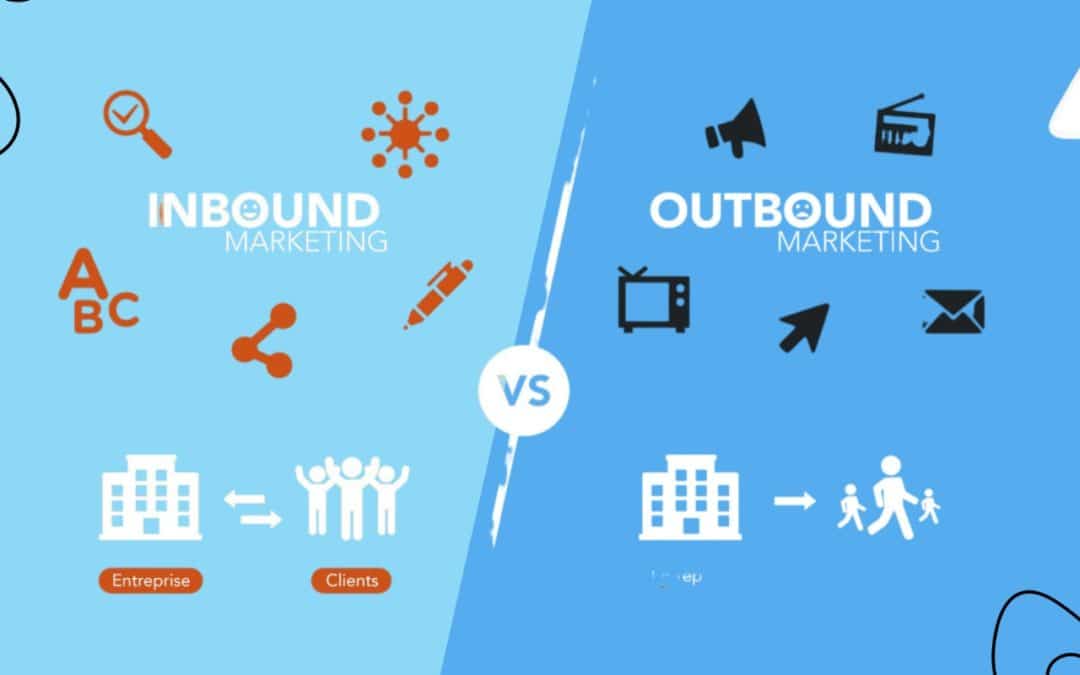
Today, businesses are always looking for better ways to reach customers and build lasting relationships. A key topic in digital marketing is the difference between inbound and outbound marketing.
A common question for beginners is, “What are inbound and outbound marketing, and which one works best?”
Inbound marketing focuses on attracting people naturally through helpful information and valuable content. Outbound marketing focuses on sending promotional messages directly to potential customers.
Knowing how both strategies work helps businesses build better marketing plans and connect with the right audience at the right time.
Inbound Marketing
Inbound marketing is a way for businesses to attract customers by sharing useful information, rather than interrupting them with ads.
This approach aims to solve problems, answer questions, and educate potential customers before trying to sell anything.
How Inbound Marketing Works
Inbound marketing uses valuable content and helpful resources. Businesses share information that answers the questions people search for online. This content draws visitors in naturally as they look for solutions.
As time goes on, these visitors start to trust the brand and may become interested in its products or services.
For example, inbound marketing includes creating blog articles, educational videos, search engine optimization, social media engagement, and email newsletters, which help customers discover a brand while searching for solutions.
Benefits of Inbound Marketing
Inbound marketing offers several long-term benefits:
- Builds trust with potential customers
- Generates organic website traffic
- Creates long-lasting brand authority
- Encourages meaningful customer engagement
Thanks to these benefits, many companies put a lot of effort into inbound strategies.
Outbound Marketing
Outbound marketing is a traditional approach where businesses promote their products directly to potential customers.
Instead of waiting for people to find them, companies actively send messages to a wide audience.
How Outbound Marketing Works
Outbound marketing uses several promotional methods. Businesses promote their products or services to reach a large audience quickly. These methods send messages straight to potential customers, rather than waiting for them to look for information.
For example, outbound marketing methods include television advertisements, display advertisements, cold calls, promotional emails, and sponsored social media ads that help businesses reach a large audience quickly.
These methods are designed to reach a wide audience quickly.
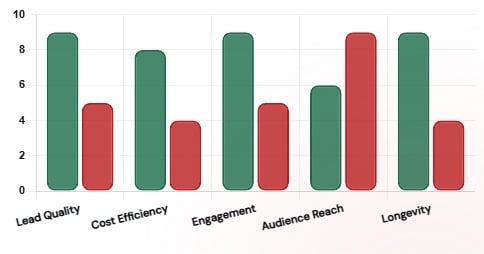
Core Differences and Methodological Contrasts in Marketing Approaches
It’s easier to understand inbound and outbound marketing when we compare how each one works.
| Feature | Inbound Marketing | Outbound Marketing |
| Strategy | Attract customers | Push promotional messages |
| Communication | Two-way interaction | One-way promotion |
| Customer Intent | Customers actively search | Customers may not be interested |
| Cost Efficiency | Long-term investment | Continuous advertising cost |
| Lead Quality | Higher quality leads | Broader audience reach |
For example, reading an informative blog is inbound marketing, while seeing a banner advertisement is outbound marketing.
Both strategies serve different purposes in marketing campaigns.
Strategic Coordination for Business Growth
Many successful businesses combine both inbound and outbound marketing approaches to achieve better results.
The advertisement helps attract attention from a wider audience, while the blog content builds trust and educates potential customers. Another common strategy is promoting a free guide or webinar through advertising campaigns.
- A company may publish a helpful blog and promote it through paid advertisements.
- Advertisements attract attention from a larger audience.
- Blog content helps build trust and educate potential customers.
Factors for Business Success and Sustainable Growth
To achieve long-term growth, businesses must focus on several important factors.
Many early-stage companies turn to startup consulting to identify the right strategies from the beginning and avoid costly missteps.
Understanding Customer Behavior
Companies must understand what their audience searches for and what problems they want to solve.
1. Creating Helpful Content
Valuable content plays a major role in attracting customers. Blogs, guides, and videos help people learn before making purchasing decisions.
For example, businesses often publish articles explaining industry trends, practical tips, and problem-solving strategies.
2. Using Promotion Strategically
Promotional campaigns become more effective when they support helpful content instead of pushing aggressive sales messages.
For example, promoting a free guide usually attracts more interested visitors than simply advertising a product.
3. Tracking Marketing Performance
Businesses should track important metrics like
- Website traffic
- Engagement rates
- Lead generation
- Conversion rate
- These insights help businesses improve their marketing strategies over time.
Conclusion
Knowing the difference between outbound and inbound marketing helps businesses build stronger and more effective marketing strategies.
Inbound marketing attracts customers by sharing valuable information and building real connections. Outbound marketing promotes products directly to a wider audience.
When businesses use both strategies together, they create a balanced marketing plan that boosts visibility, builds trust, and supports long-term growth.
Instead of picking just one method, successful companies use both strategies together to reach customers and offer real value.
FAQs
1. What is the main difference between inbound and outbound marketing?
Ans. Inbound marketing attracts customers through helpful content such as blogs, videos, and SEO, while outbound marketing pushes promotional messages directly to potential customers through advertisements, emails, or cold calls.
2. What are some examples of inbound marketing?
Ans. Search engine optimization (SEO), social media engagement, educational videos, email newsletters, and downloadable guides that help customers find useful information while searching online.
3. What are common outbound marketing methods?
Ans. Outbound marketing methods include television advertisements, display advertisements, cold calls, promotional emails, sponsored social media ads, and radio advertisements that directly promote products or services to a large audience.
4. Which is better: inbound marketing or outbound marketing?
Ans. Both strategies have advantages. Inbound marketing builds long-term relationships and trust with customers.
5. Why do businesses combine inbound and outbound marketing strategies?
Ans. Businesses combine these strategies to increase visibility and attract different types of customers. Outbound marketing helps reach new audiences quickly.