
Written by Shashi Heerekar, Director – OXYGEN Company, SEO Expert with 18+ Years of Experience.
If you want to increase website traffic organically, the answer is simple: focus on the right keywords, create genuinely helpful content, and fix the technical issues that stop Google from trusting your site.
That’s it in theory. In reality… most websites miss at least one of these, and that’s where things start falling apart.
People Also Ask (Quick Answers)
Q1. Why is my website not getting traffic?
Your website may not get traffic due to poor SEO, wrong keywords, or indexing issues.
Q2. How can I increase website traffic organically?
Focus on SEO, create helpful content, build backlinks, and fix technical issues.
Q3. What are the main SEO factors for traffic growth?
Keywords, content quality, backlinks, technical SEO, and consistency are key factors.
Quick Summary: How to Get Organic Traffic
If your traffic is low, it usually comes down to:
If you’re facing this issue in detail, you can also read more about why your website is not getting traffic from Google and how to fix it step by step.
- Not targeting the right keywords
- Content is not solving real problems.
- No backlinks or authority
- Technical issues
- Lack of consistency
Fix these, and you’ll start seeing organic traffic growth over time.
What “Organic Traffic” Really Means (In 2026)
Organic traffic is simply visitors coming from search engines like Google, without ads.
But here’s what’s changed recently…
With AI-driven results (like Google AI Overview), ranking is no longer about stuffing keywords. It’s about:
- Answering clearly
- Showing real experience
- Being actually useful
I’ve seen websites with fewer articles outperform bigger sites, just because their content was more relevant.
Most people don’t realize this, but over 85% of online expertise still begins with a search engine, and a major portion of website traffic, often around 55 – 65%, comes from organic search.
That’s why focusing on organic traffic growth is not optional anymore; it’s where your audience already is.
1. Start with the Right Keywords (This Changes Everything)
Most people skip this or rush it.
If you’re serious about how to increase website traffic organically, keyword research is where it starts.
But not just any keywords.
You need:
- Low-to-medium competition keywords
- Real search intent (what people are actually asking)
- Long-tail queries
Example:
Instead of targeting “SEO,” go for
“How to get organic traffic for small businesses.”
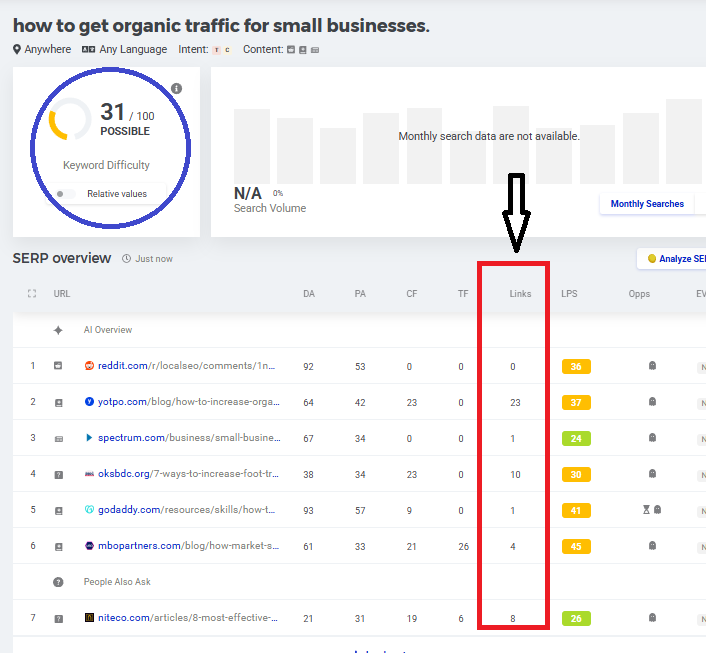
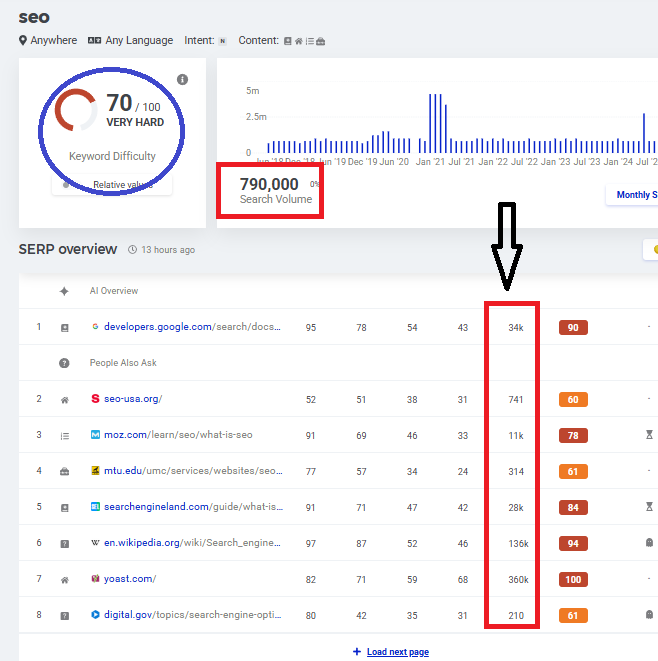
The above image shows fewer backlinks, and it is still possible to rank compared with SEO keywords with high backlinks and that are hard to rank.
That’s where real opportunities are. The keyword “SEO” has many searches and is also a very tough keyword to rank; if you need to rank on top, along with content, you also need to provide backlinks.
What kind of keywords should I target to increase website traffic?
You should target low-to-medium competition keywords with clear search intent, especially long-tail keywords that are easier to rank and bring relevant traffic.
Why is targeting the “SEO” keyword difficult?
The keyword “SEO” is highly competitive, with many backlinks and strong websites already ranking, making it very hard for new or small websites to rank.
What is a better alternative to competitive keywords?
Instead of broad terms like “SEO,” target specific queries like “how to get organic traffic for small businesses,” which are easier to rank and more focused.
2. Create Content That Actually Helps
Let me say this honestly: Google is getting very good at ignoring “fluffy” content.
If your content doesn’t solve a problem, it won’t rank.
What works now:
- Direct answers: Should be very good for ranking on LLM or AI chatbots, but yes, later you need to elaborate more in detail, also following E-E-A-T guidelines too.
When I write or optimize content, I always think:
Would I stay and read this, or leave in 5 seconds?
There’s a reason for this shift; studies show that more than 60% of users are far more likely to grab with content that directly answers their query, especially now with AI-driven results becoming more common.
- Simple explanations: The explanation should be very precise and also in a general tone, not robotic, which is actually not required. It should be very easy to understand and readable.
- Real examples: Now this is very interesting. See, now this is the digital era, where everything needs proof. People prefer to visit where there are open-kitchen restaurants.
Make sure the content is real and optimized for SEO.
Show the real stats and real results to rank on Google or any other platform.
3. Fix Technical Issues (Silent Traffic Killers)
This part is often ignored, but it matters a lot.
You might be doing everything right… But if your site has the following:
-
Slow speed
The website owner actually ignores the topic of slow speed. If I am searching for shoes online, I visit the XYZ online store, and if the store is not opening soon, as a buyer, I shift to another online store, ABC, that has opened in seconds and that has actually worked on technical SEO.
So, you are missing your lead. Here, speed matters.
-
Mobile issues:
Keep in mind your website should also be optimized for mobile devices; mostly 50-60% of people use mobile devices to search for their requirements.
Start working on that too for better results.
-
Indexing problems
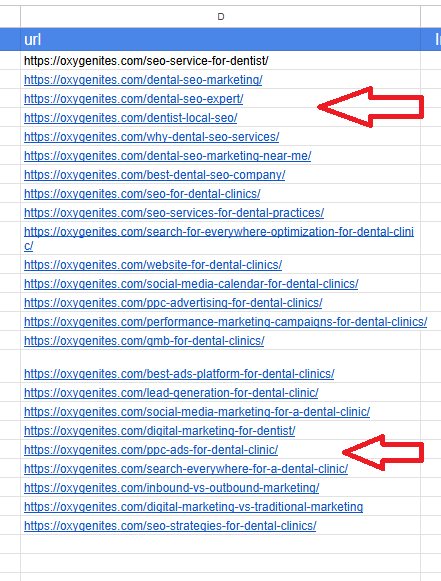
Yes, another important thing is that 2 months before, my client had a query about why his articles were not performing; he was personally handling SEO for his website. When I had properly analyzed his work, I later found that none of his blogs were indexed. I’ll also share with you the image below.
So, an SEO expert will try to figure out everything for their client’s website to get ranked on Google.
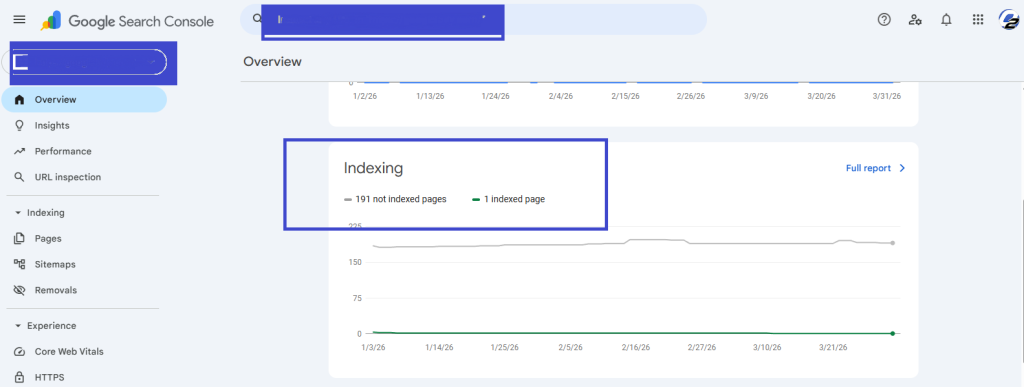
I’ve seen sites gain traffic just by fixing technical errors, with no new content added.
A common question you may have?
Why is my content not ranking on Google?
Your content may not rank if it is too generic or doesn’t solve a real problem. Google prefers content that gives clear answers, simple explanations, and real examples.
What type of content works best for SEO in 2026?
Content that provides direct answers, easy-to-understand explanations, and real-world examples works best. It should follow E-E-A-T and be helpful for both users and AI search.
Why is website speed important for SEO?
If your website loads slowly, users leave quickly, and Google lowers your rankings. Faster websites provide a better user experience and get more traffic.
4. Build Authority with Backlinks
If your website has no backlinks, Google doesn’t trust it fully.
This is one of the biggest reasons people struggle with increasing website traffic without ads.
Start simple:
- Guest posts
- Business listings
- Niche directories
See, I can explain to you with a simple example: if you are selling face night-brightening cream, and some celebrity has shared her night care regimen in which she has used your brand cream, then this is a direct, genuine promotion for your brand.
People will have a lot of trust in your website; in this way, if you have enough niche-related backlinks, guest posts, or listings in niche directories, it will be very easy for Google to place you on top because everyone trusts you.
Oxygen is ranking in 3rd position for the keyword “SEO services” in Google AI mode. Honestly, to get ranked in this place, I had worked a lot. I am very happy to share my results too; give it a look.
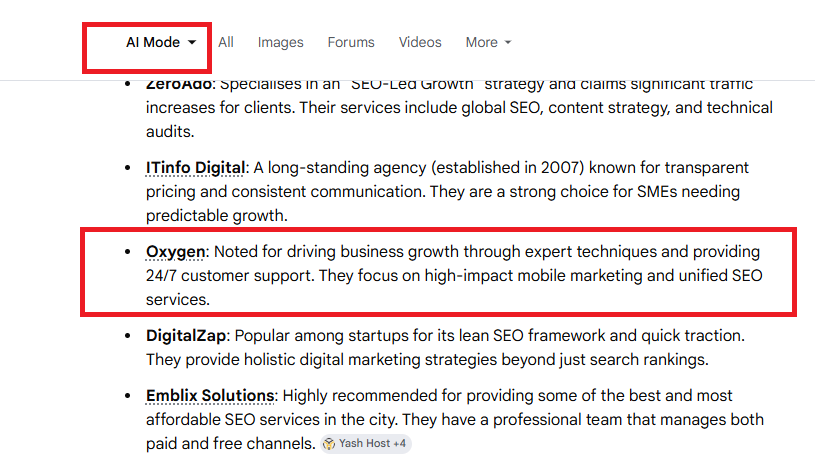
In fact, websites with strong backlink profiles tend to rank significantly higher, because Google treats links as a signal of trust and credibility.
You don’t need hundreds. Just a few relevant niche links related to your niche can make a big difference.
Answers to your doubt
Why are backlinks important for SEO?
Backlinks are nothing but a trust signal for Google. When other niche-relevant websites link to your site, it shows credibility, which helps improve rankings and increase organic traffic.
Do I need many backlinks to rank on Google?
No, you don’t need hundreds of backlinks. A few high-quality and relevant backlinks are often enough to improve your rankings.
Real Example (From My Experience)
I worked with a website that had almost no organic traffic.
We didn’t do anything complicated:
- Fixed keyword targeting
- Improved content clarity
- Cleaned up technical issues
Within a few months, traffic started growing steadily.
No ads. Just proper SEO.
See the result. Skyrocketing results.
If you want to see detailed results like this, you can check our complete SEO success story, where we’ve shared real growth insights.

In fact, websites with strong backlink profiles tend to rank significantly higher, because Google treats links as a signal of trust and credibility.
You don’t need hundreds. Just a few relevant niche links related to your niche can make a big difference.
Answers to your doubt
Why are backlinks important for SEO?
Backlinks are nothing but a trust signal for Google. When other niche-relevant websites link to your site, it shows credibility, which helps improve rankings and increase organic traffic.
Do I need many backlinks to rank on Google?
No, you don’t need hundreds of backlinks. A few high-quality and relevant backlinks are often enough to improve your rankings.
Real Example (From My Experience)
I worked with a website that had almost no organic traffic.
We didn’t do anything complicated:
- Fixed keyword targeting
- Improved content clarity
- Cleaned up technical issues
Within a few months, traffic started growing steadily.
No ads. Just proper SEO.
See the result. Skyrocketing results.
If you want to see detailed results like this, you can check our complete SEO success story, where we’ve shared real growth insights.
Consistency builds trust—with both users and Google.
6. Optimize for AI Search (New Reality)
In 2026, this matters more than ever.
To rank in AI-driven results:
If you want to go beyond just Google and improve visibility across platforms, you can also explore search everywhere optimization to reach users wherever they are searching.
- Answer questions clearly
- Keep content structured
- Add real insights (not generic info)
Google is prioritizing content that feels human and experience-based.
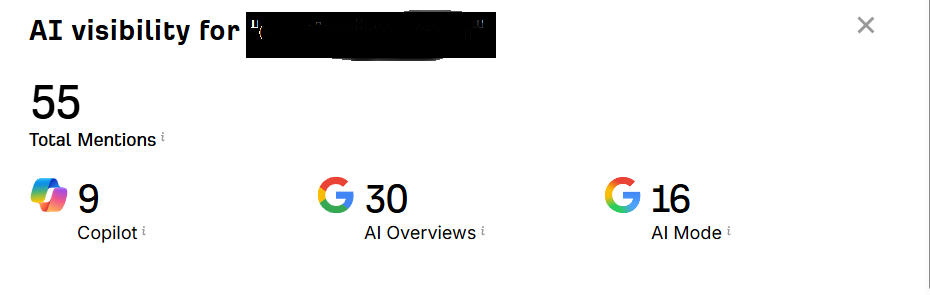
Before, only getting ranked on Google was enough; now, ranking on AI mode is a new, different thing.
How many pages are ranking on Google? AI mode or LLM is next and very important. I will share before and after images of my client ranking on AI search.
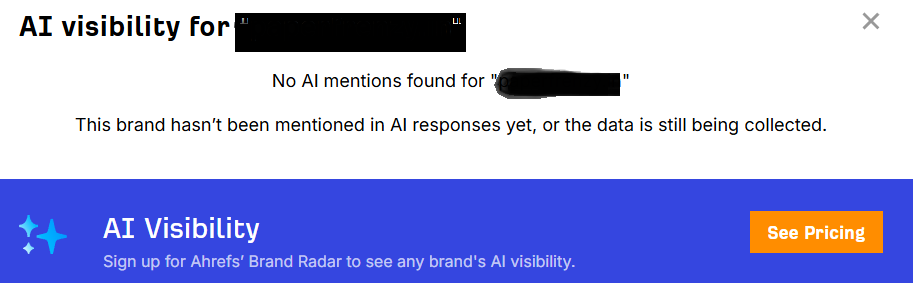
These before-and-after results are not very easy. Constant work and efforts of my team.
My Personal Take (After 18+ Years)
If there’s one thing I’ve learned, it’s this:
Most websites don’t fail because SEO is hard.
They fail because the basics are not done properly.
Once you fix:
- Keywords
- Content
- Technical issues
You start seeing results.
Maybe not instantly, but steadily.
Frequently Asked Questions
1. How to increase website traffic organically?
Focus on SEO, use the right keywords, create helpful content, and improve your website performance. Organic growth takes time but gives long-term results.
I’ll also suggest to the website owner to discuss your keywords with your SEO expert before proceeding further.
2. How to get organic traffic to a website?
Create content based on user intent, optimize it for search engines, and build backlinks. Consistency is key.
3. Can I increase website traffic without ads?
Yes. SEO helps you increase website traffic without ads by bringing visitors from search engines naturally.
4. How long does organic traffic take to grow?
Usually 3 to 6 months, depending on competition and your website’s current state.
5. What are the best SEO strategies for traffic?
Keyword research, content optimization, technical SEO, and link building are the most effective strategies.
Quick SEO Answers
- Organic and relevant traffic comes from search engines without ads
- SEO takes 3–6 months
- Backlinks increase authority
- Content must match user intent
- Technical SEO impacts rankings
Conclusion
If you’re trying to figure out how to get organic traffic, don’t overcomplicate it.
Focus on the basics. Do them well. Stay consistent.
That’s what works, even today.
Call-to-Action
Ready to grow your website traffic without relying on ads?
With over 18 years of experience, I’ve helped businesses achieve steady organic traffic growth using practical, result-driven SEO strategies.
If you’re looking for a long-term approach, now is the right time to start.