
Written by Shashi Heerekar, Director – OXYGEN Company | SEO Expert with 18+ Years Experience
If you want to find low-competition keywords, focus on long-tail, intent-driven search terms that have lower competition but real search demand. These are the keywords that actually help you rank faster and bring consistent traffic.
Honestly, this is where most websites either grow… or get stuck.
Quick Summary: How to Find Low Competition Keywords
If you’re short on time, here’s the simple version:
- Target long-tail keywords for SEO
- Focus on real search intent.
- Avoid highly competitive broad keywords.
- Look for easy-to-rank keywords with smaller competitors.
- Use Google suggestions and basic tools.
Get this right, and your organic traffic growth becomes much easier.
What Are Low-Competition Keywords?
Low-competitiveness keywords are search terms that are easier to rank because fewer strong websites are targeting them.
Many small website owners usually pick hard keywords before proceeding with easy keywords. They think targeting high traffic at the beginning only brings traffic to their website, but that is totally wrong.
These are usually:
- More specific
- Longer phrases
- Less competitive
For example:
Select an easy keyword like “best on-page SEO techniques for blog” instead of “SEO.”
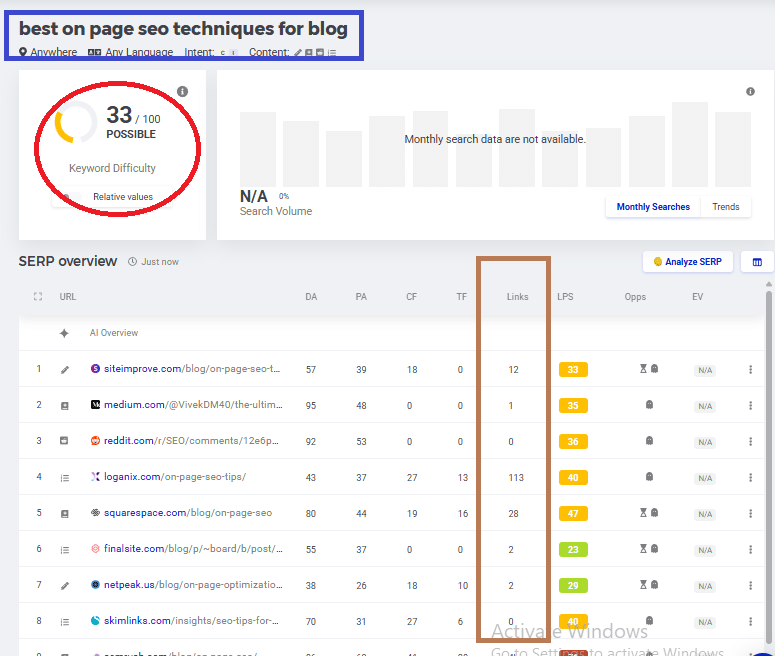
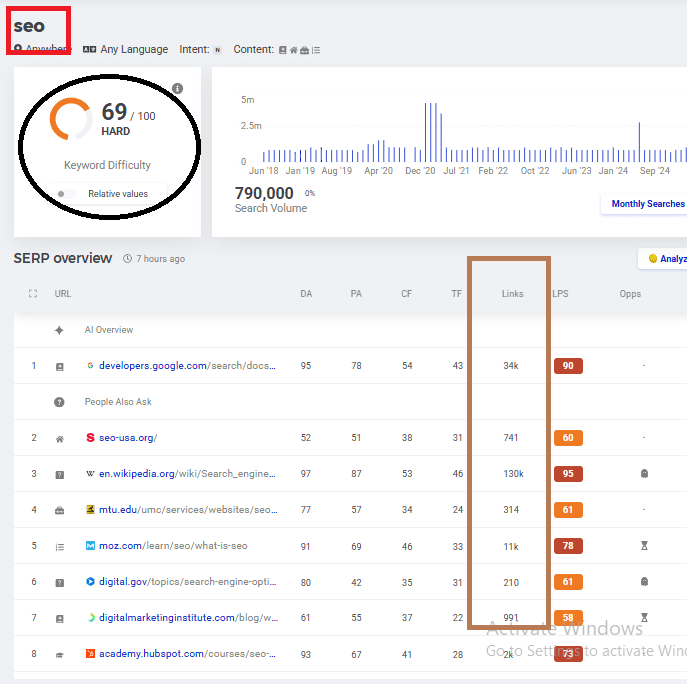
I have also shared the images; selecting keywords can bring a difference in the website traffic. I have also shared a short list of why backlinks are important to rank on Google.
- Builds authority & trust (E-E-A-T signal) for Google
- Improves ranking power (core ranking factor)
- Helps faster crawling & indexing
- Passes link equity (SEO juice)
- Drives referral traffic & engagement signals
Before targeting very difficult keywords, go with easy keywords. Having fewer backlinks makes it easy to bring traffic to your website.
Now writing a blog is not just enough; to get a rank on Google or LLMs, it should also have niche-related backlinks for support.
Why Are Low-Competition Keywords Important?
Let me put it simply for you: if you target only high-competition keywords, you’ll wait… and wait, but you’ll end up with no result.
But when you focus on easy-to-rank keywords:
- You start getting traffic faster.
- You build authority gradually.
- You reduce dependency on backlinks initially.
In fact, most SEO studies show that long-tail keywords make up nearly 60% of all search queries, which means the real opportunity is not in broad keywords but in specific ones.
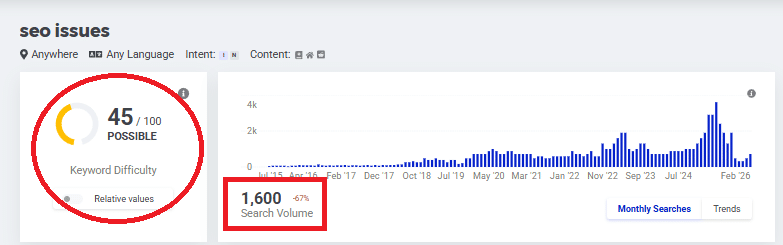
The above keyword “seo issues” has good search volume, and keyword difficulty is still possible.
So, focusing on this type of keyword can initially bring traffic to your website. There is also the possibility of ranking, as there are fewer backlinks for that keyword.
How to Find Low Competition Keywords Easily
Let’s not overcomplicate this. This is exactly how I approach keyword research for SEO in real projects.
1. Start with Long-Tail Keywords
Most low-competition keywords are actually long-tail keywords for SEO.
👉 Example:
- “Tips to SEO” ❌
- “Cheap search engine optimisation services” ✅
These keywords are:
- Easier to rank
- More targeted
- Better for conversions
Selecting a keyword can make a lot of difference in SEO ranking factors.
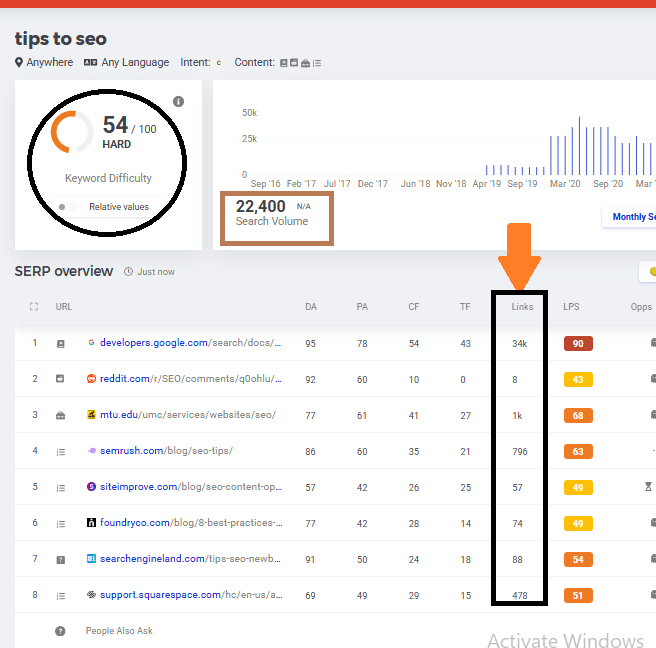
When I select the short keyword “Tips to SEO,” I find that the keyword difficulty is hard, and I also need to provide backlinks to rank on Google or other platforms.
The website that is ranking for this keyword has provided 34k backlinks to maintain that position.
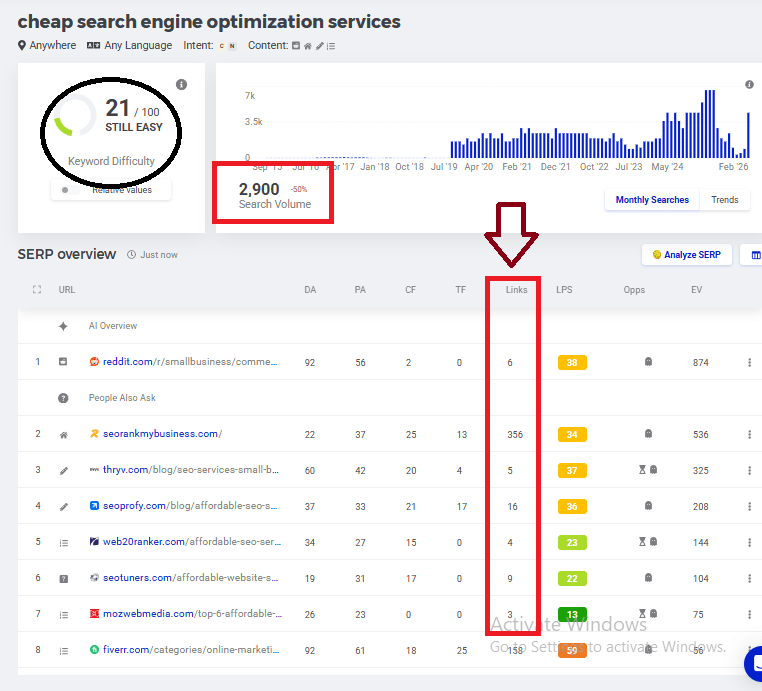
And when you select the long-tail keywords “cheap search engine optimisation services,” this keyword has good search volume and is still easy to rank with. You can rank your article with zero backlinks.
2. Use Google Search or other paid tools for better results. (Simple but Powerful)
Just type your keyword in Google and check:
- Autocomplete
- “People also ask”
- Related searches
These are real user queries, not assumptions.
I personally use https://mangools.com/kwfinder/ for keyword searches apart from Google Search.
This tool helps me understand how many backlinks are needed for a blog to rank, shows the search volume of keywords, and identifies keyword difficulty, something Google does not provide in such detail.
Tools are helpful, but sometimes just search your keyword and observe:
- Are big brands dominating?
- Or smaller blogs’ rankings?
If smaller sites are ranking, that’s your opportunity.
4. Focus on Question-Based Keywords
Search behaviour has changed.
People now search like
- “How to find low-difficulty keywords.”
- “What are easy-to-rank keywords?”
- How to Find Easy Ranking Keywords Easily
- How to Optimise Blog Posts for Google Ranking
These queries are easier to rank and work well in AI search results, too.
5. Look for content gaps or do proper keyword clustering.
Sometimes the opportunity is not in the keyword but in how poorly it’s answered.
Ask yourself:
- Can I explain this better?
- Can I make it simpler?
That’s where ranking happens.
Make sure, before you write an article, that you do a deep search and write it in your own style with proper stats and data.
When I talk about keyword clustering, for example, if I’m writing a blog on SEO services or digital marketing services for dentists, I make sure to include all keywords related to dentists. This approach is called keyword clustering, and it helps Google trust your website more easily.
Real Example (From Experience)
I worked with a website that was targeting only broad keywords.
Result? No rankings. No traffic.
We shifted to:
- Low-competition keywords
- Long-tail queries
- Intent-based content
Within a few months, traffic started growing steadily.
No tricks. Just smart targeting.
And honestly, this is something I’ve seen repeatedly: small keyword wins lead to big growth over time.
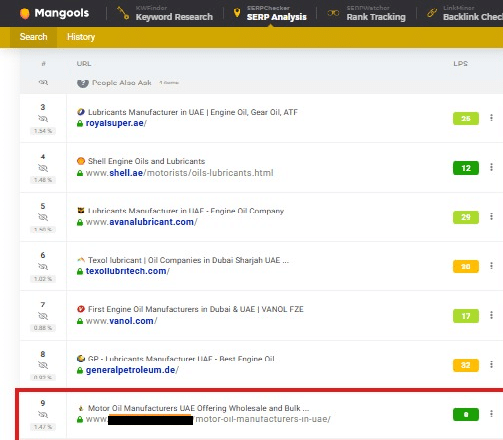
We have focused on the long tail, like why global lubricants prefer using ISO certificates and motor oil UAE manufacturers offering bulk directly targeting short keywords.
What Makes a Keyword Easy to Rank?
Here’s a simple checklist I personally follow:
- Low competition
- Clear intent
- Long-tail format
- Smaller websites ranking
- Weak or incomplete content in search results
- Less backlinks
If a keyword ticks these boxes, it’s worth targeting.
Are easy-ranking keywords still effective in 2026?
Yes, and even more than before. I have personally used this trick and also applied this strategy to my clients’ websites; the results are above, and you can check.
With AI-driven search:
- Google prefers specific answers.
- Broad keywords are harder to rank.
- Long-tail queries are increasing.
📊 Also, a large portion of organic traffic, often around 65–75%, comes from long-tail searches, especially for newer websites.
So if you’re serious about how to get organic traffic, this is the safest strategy.
Conclusion
If you’re trying to figure out how to find low-difficulty keywords, don’t overthink it.
Focus on:
- Long-tail keywords
- Real user intent
- Easy-to-rank opportunities
Do this consistently, and your traffic will grow, slowly at first, then steadily.
Frequently Asked Questions (FAQs)
1. What are low-competition keywords?
Easy ranking keywords are search terms that are easier to rank because fewer strong websites are targeting them.
2. How to find low-competition keywords easily?
Use long-tail keywords, Google suggestions, and competitor analysis to identify keywords with lower competition.
3. Are long-tail keywords good for SEO?
Yes, long-tail keywords for SEO are highly effective because they are easier to rank and bring targeted traffic.
4. What are easy-to-rank keywords?
Easy to rank keywords are low-competition search terms that require less authority and fewer backlinks.
📢 Call-to-Action
If you’re struggling to find the right keywords or grow your traffic, you don’t need more tools; you need the right strategy.
With over 18 years of experience, I’ve helped businesses identify easy ranking keywords that actually bring results.
If you want long-term organic growth, this is where it starts.