
Written by Shashi Heerekar, Director – OXYGEN Company | SEO Expert with 18+ Years Experience
If your website isn’t getting traffic, it usually means Google either can’t understand your site or doesn’t find it useful enough to show. In simple terms, your site exists, but it’s not visible where your customers are searching.
I’ve seen this happen a lot. A website looks good, and everything seems “fine”… but traffic? Almost zero. Let’s break down the real reasons, and more importantly, how to fix them.
Quick Summary: Why Your Website Is Not Getting Traffic
If you’re still wondering why your website has no traffic, it usually comes down to a few common issues:
- Not indexed: Google hasn’t discovered or added your pages yet.
- Wrong keywords: You’re targeting terms people don’t search for
- Poor content: Content is not useful or doesn’t answer real questions
- No backlinks: Your website lacks authority and trust
- Technical issues: Slow speed, mobile problems, or errors affecting performance
Fixing these basics is the first step in improving visibility and understanding how to increase website traffic in a sustainable way.
1. Your Website Is Not Properly Indexed
One of the most common reasons for low website traffic is that Google hasn’t even indexed your pages.
Up to 80% of the website’s major concern is the indexing of the blogs or pages.
I’ve had clients come to me asking, “Why is my website not ranking on Google?” … and the issue was simple: Google didn’t know their pages existed.
Fix:
- Check Google Search Console → Pages → Indexing.
- Submit your sitemap.
- Fix “noindex” or crawl errors.
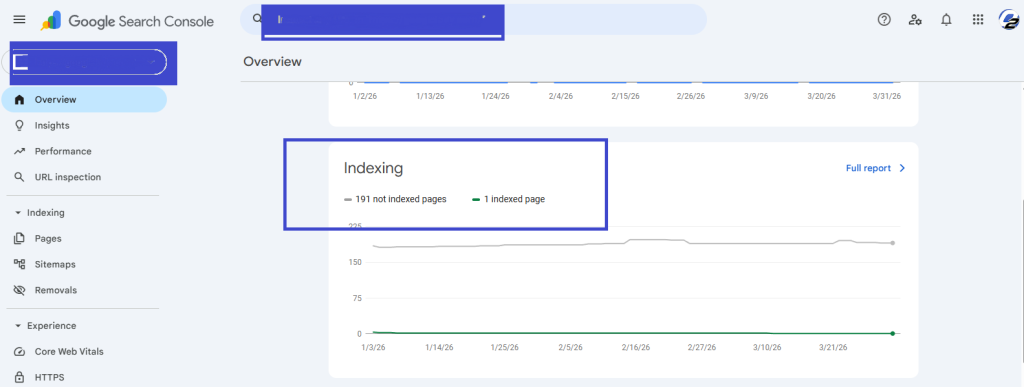
The above is my client’s website; all his blogs and pages are not indexed, as you can see.
So we need to fix these technical issues too. If the blogs are not getting indexed on Google, how can you expect a ranking on Google?
Every SEO analyst will first analyze the website deeply and later explain to them how much time it can take to improve their Google ranking.
2. You’re Targeting the Wrong Keywords
This is a big one.
Many websites target keywords that are either.
- Nobody searches.
- Or are they too competitive?
So even after publishing content, nothing happens.
Fix:
Focus on what people are actually searching.
Not what you think they’re searching for.
This is the foundation of how to get organic traffic to a website.
As an SEO expert, I’ll suggest to the website owner to provide the keywords that he is willing to rank on Google, and later, that particular expert will guide you on how much time it will take to rank on Google.
As an SEO expert, my main keyword is “SEO services,” and the local keyword is “SEO services in Hyderabad.” We are ranking on Google AI mode too; you can check below.
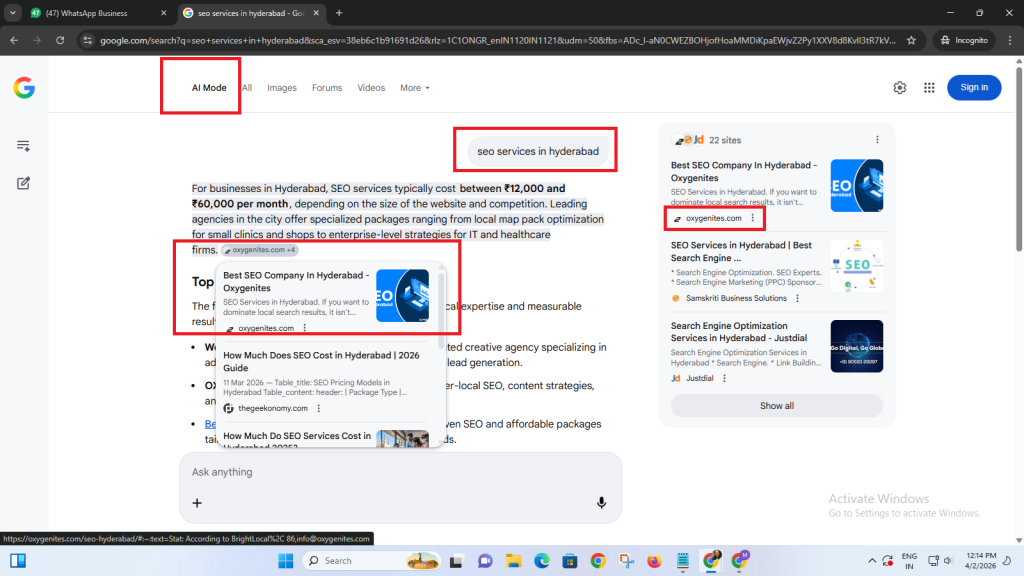
In the same way, the client also has the main keywords that he is willing to rank on Google. Make sure the website owner properly discusses this with your SEO expert before proceeding further.
This brings trust.
3. Your Content Isn’t Solving Real Problems
Let me be honest, Google has changed a lot.
With AI Overviews now, Google prefers content that directly answers questions. If your content is vague or generic, it won’t rank.
Fix:
- Write clear, direct answers.
- Add real examples
- Focus on user intent.
https://developers.google.com/search/docs/appearance/ranking-systems-guide
The link that I have shared with you is a complete guide on how to rank on Google and what the guidelines are following Google updates.
https://developers.google.com/search/docs/appearance/ai-features
The above link shows how to rank on Google AI mode, too.
Google does not need a simple, short, or direct answer, but it needs content that is useful and relevant.
4. Technical Issues Are Holding You Back
Sometimes the problem is not content; it’s your website itself.
- Slow loading speed.
- Mobile issues.
- Broken pages.
These silently kill your rankings.
Fix:
- Improve page speed.
- Make your site mobile-friendly.
- Fix crawl errors.
5. No Backlinks (Low Authority)
If no one is linking to your website, Google doesn’t trust it much.
I’ve seen sites with great content still not ranking, just because they had zero authority.
Fix:
- Build quality backlinks.
- Get listed in directories.
- Publish guest posts.
Having the best content with strong backlinks is like enjoying all your favorite foods without gaining weight.
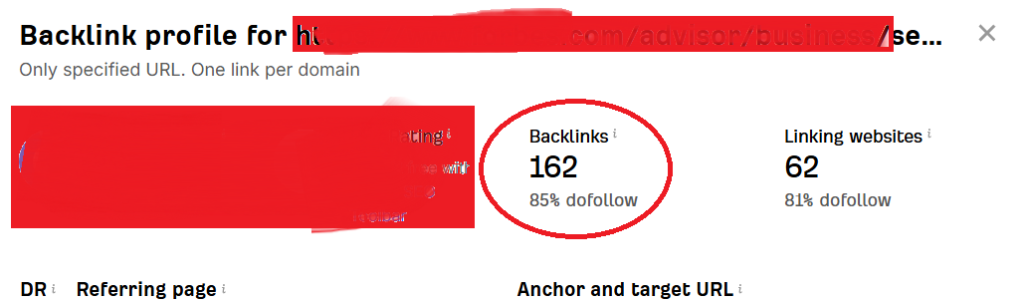
You can see in the above image that they have, along with content, also worked on backlinks to get a rank on Google, so this may probably work with you, too.
6. Poor Website Structure
If your website is confusing, Google gets confused, too.
No clear headings, no internal linking… everything feels scattered.
Fix:
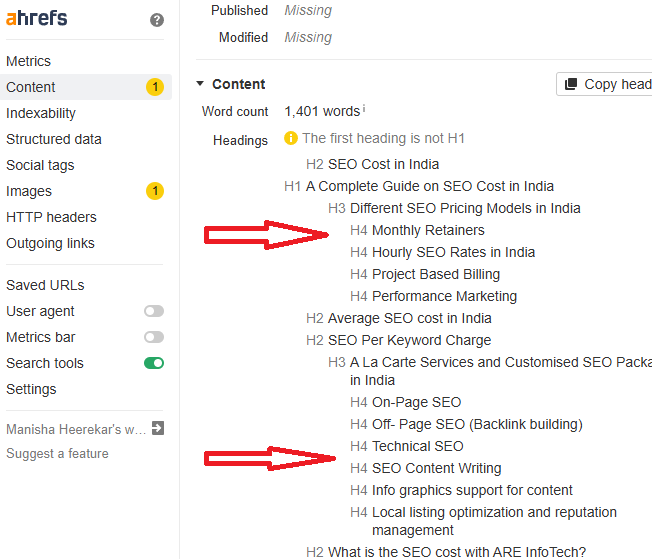
- Use proper H1, H2, and H3 structures.
- Add internal links.
- Organize content clearly.
7. You’re Not Consistent
SEO is not a one-time task.
I’ve seen businesses publish 2–3 blogs… then stop. Then they wonder why the website has no traffic.
Fix:
- Publish regularly.
- Keep updating old content.
- Build topical authority over time.
8. Ignoring User Experience
Google now tracks how users behave.
If visitors leave quickly, your rankings drop.
Fix:
- Improve readability
- Add a clear structure.
- Make content easy to scan.
9. No Local SEO Optimization
This is especially true for small businesses.
If you’re not optimizing for location, you’re missing local traffic.
Fix:
- Optimize Google Business Profile.
- Use local keywords.
- Add location pages.
10. Not Adapting to New SEO Trends
SEO today is very different from a few years ago.
With AI-driven search, Google prefers the following:
- Experience-based content.
- Direct answers.
- Trust signals.
If your content feels outdated, it won’t rank.
Fix:
- Write based on real experience.
- Keep content updated.
- Focus on helpful, human-first content.
Real Example (What I’ve Seen Work)
One website I worked on had almost no traffic. The owner kept asking, “Why does the website have no traffic even after posting blogs?”
We fixed:
- Keyword targeting.
- Technical issues.
- Content clarity.
Within a few months, traffic started growing steadily.
Nothing magical, just doing the basics right.
How to Increase Website Traffic (Simple Strategy)
If you’re wondering how to increase website traffic, here’s what actually works:
- Focus on the right keywords.
- Create useful content.
- Fix technical issues.
- Build backlinks.
- Stay consistent.
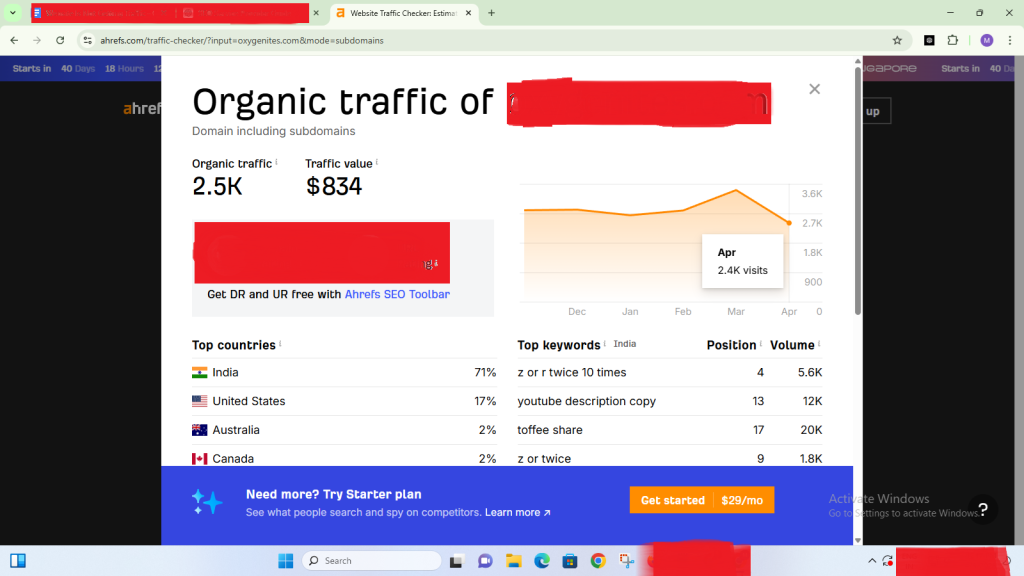
My above client was having zero traffic; by using Oxygen services within 1-2 months of the services, his traffic has organically improved.
I am not saying that the above result, which I have shared, is perfect, but we can improve even more; we have tried to maintain this ranking even after many Google updates, too.
That’s it. No shortcuts.
My Honest Take (From Experience)
After working in SEO for years, I’ve realized something simple—
Most websites don’t fail because of one big mistake.
They fail because of many small things not done properly.
And the good part?
Once you fix those, results start coming.
Final Thoughts
If your website is not getting traffic, don’t panic. It’s usually fixable.
Understand the real reasons for low website traffic, work on the basics, and stay consistent.
SEO takes time, but when it works, it builds long-term growth that ads simply can’t match.
Frequently Asked Questions (FAQs)
1. Why is my website not getting traffic?
Your website may not be getting traffic because it is not properly indexed, targeting the wrong keywords, or lacking quality content. In many cases, it’s a combination of technical issues and poor SEO strategy.
2. Why is my website not ranking on Google?
If your website is not ranking on Google, it could be due to low-quality content, no backlinks, technical errors, or high competition. Google only ranks pages that are helpful and trustworthy.
3. How to increase website traffic quickly?
To increase website traffic, focus on improving content quality, targeting the right keywords, fixing technical issues, and promoting your pages. While quick improvements are possible, consistent SEO brings long-term results.
4. How to get organic traffic to a website?
To get organic traffic to your website, generate useful content based on user intent, optimize it for SEO, and build backlinks. Organic traffic grows gradually but provides long-term benefits.
5. What are the main reasons for low website traffic?
The main reasons for low website traffic include poor keyword targeting, lack of SEO optimization, slow website speed, no backlinks, and inconsistent content updates.
6. How long does it take to see SEO results?
It generally grab upto 3 to 6 months to show noticeable results, depending on your competition, industry, and the current condition of your website.
7. Can a new website get traffic without ads?
Yes, a new website can get traffic without ads by focusing on SEO, creating valuable content, and targeting low-competition keywords.
8. Is SEO still effective in 2026?
Yes, SEO is still highly effective in 2026. With AI-driven search, Google now prioritizes helpful, experience-based, and user-focused content more than ever.