by Shashikanth Heerekar | Jun 24, 2025 | Technology
Find the best Data Analyst training institutes in Hyderabad with expert faculty, real-time projects, and 100% placement support in 2025.
Introduction
In 2025, are you searching for a satisfactory records analyst schooling institute in Hyderabad? You’re inside the proper region! Hyderabad has become a top destination for students, freshers, and operating specialists who want to build a career in information. With increasing demand in tech and commercial enterprises, studying information analytics can open many doorways.
Many options exist, from facts analytics guides in Hyderabad with placements to applications through top names like Digital Vidya, IIT, and Besant Technologies. You’ll discover a suit Whether you’re seeking a quick direction, an IIT analytics path online, or hands-on training in areas like Ameerpet.
This article covers the top statistics analyst direction institutes presenting actual-time initiatives, expert-led schooling, and location guides. Whether you need to improve your skills or begin sparkling, those programs in Hyderabad allow you to develop inside the world of facts.
WhiteScholars
WhiteScholars Academy, established in 2021 and based in Kukatpally, Hyderabad, is a top choice for learning data analytics, data science, and digital marketing. They offer both online and classroom training with a focus on real-time projects, beginner-friendly teaching, and placement support.
Students benefit from resume building, mock interviews, and virtual internships with top companies like Microsoft, Meta, and PwC. With expert trainers and small batch sizes, WhiteScholars is ideal for freshers and professionals looking to upgrade their careers.
Location: Kukatpally, Hyderabad
Courses Offered
- Data Science
- Digital Marketing
- Data Analytics
Contact Details
by Shashikanth Heerekar | Jun 20, 2025 | SEO News
The increase and decrease in search engine ranking are a common factor that every website has to face. However, if your website is not showing any improvement in its ranking despite hours of effort, then you need a better SEO strategy.
And what better way is there to boost SEO strategy than using Prepostseo’s toolkit? Prepostseo is an online platform that offers various tools tailored to boost SEO strategies. With them at your disposal, you can significantly impact your overall search engine ranking.
In this blog, we will discuss different Prepostseo tools that can boost your website’s search engine ranking. So, let’s get started.
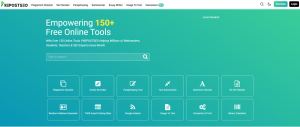
Prepostseo Tools to Boost SEO Strategies
Prepostseo offers a variety of tools that positively impact search engine optimization. Some of the important ones are given below:
Paraphraser Tool
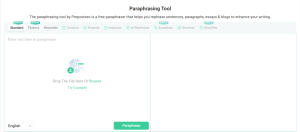
Prepostseo’s paraphrasing tool is an AI-powered one. Its algorithms replace words with synonyms and restructure sentences. Moreover, the paraphrased content does not lose its original meaning.
It is an ideal tool for rephrasing duplicate and low-quality content. Through rephrasing, you can avoid keyword stuffing and improve content readability and uniqueness.
Moreover, the tool has different paraphrasing modes, i.e., standard, fluency, creative, academic, etc. With these, you can convert your content according to readers’ preferences.
Overall, by rephrasing your content to match the reader’s preferences, you can improve your website’s search engine ranking.
Plagiarism Checker
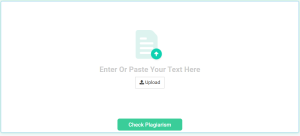
The Prepostseo plagiarism checker is a tool designed to detect duplicate content. It compares your text with content that already exists on the web.
This tool shows the percentage of unique and duplicated content. Moreover, the plagiarism tool highlights any duplicated content and provides a link to the content’s webpage.
Because of this, you can easily find and change duplicated content. You will be able to create unique content that interests readers. And through unique content, you can improve customer engagement and your website’s rank.
Readability Checker
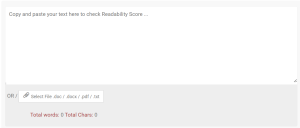
The readability checker of Prepostseo is an online tool that checks the readability score of written content. With this tool, you can write simple and digestible content. This tool divides the content readability score by different grades.
From the lowest score, “college graduate”, to the highest score, “5th grade.” A lower readability score means the content is difficult to digest or understand. While a higher readability score means your content is easy to digest.
With this tool, you can check your content and modify it for a good readability score. A good readability score would bring a response from readers. And this response would be an indicator to search engines through which your website ranking would increase. Hence, this tool is a good choice for content writers.
Keyword Density Checker
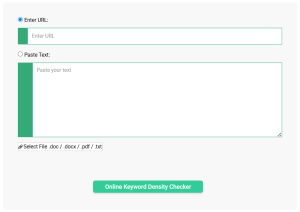
The keyword density checker is another important tool for SEO strategies. With this tool, you can easily check how many times you have used specific keywords. After all, if you repeatedly use specific words in your content, it makes your content feel robotic and lifeless.
Search engines’ algorithms lower the search engine rankings of content with repetitive words. To readers, such content would indicate a lack of detail, making them instantly lose interest.
Keep in mind that keywords are the bridge between readers and your content. Search engines study the keywords to determine what your content is about and then rank your webpage. So, it is a convenient tool for writers to keep their content unique and engaging.
DA PA Checker
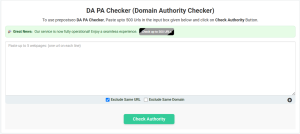
The DA PA Checker by Prepostseo is another valuable tool that can help improve SEO strategies. With this tool, you can check the Domain Authority (DA) and Page Authority (PA) scores. Along with them, it also shows the IP address of the website.
This is a convenient tool through which you can analyze your competitors’ websites. This way, you will be able to identify and make improvements in areas that surpass your competitors.
Moreover, with it, you can assess the quality of your backlinks. Always use high-authority backlinks, as they positively impact your DA/PA.
With the DA PA Checker, you can identify the performance metrics of webpages. Pages with low PA need improvement, while pages with high PA can be your examples for crafting successful content.
Backlink Checker
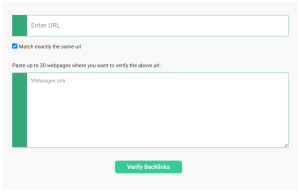
Prepostseo’s backlink checker verifies your website’s backlinks and their effectiveness. With this tool, you can monitor and avoid poor-quality backlinks. Be aware that a website with high-quality backlinks is likely to improve its search engine ranking.
As for backlinks, they are the hyperlinks from one website to another. Backlinks help a search engine recognize the importance of a website’s content. They are like a vote of confidence that determines the value and trustworthiness of a website.
Tools Availability
Accessing the Prepostseo toolkit for SEO strategies is a simple process. Just open the website and start using the tools. Prepostseo offers a cost-free use for its use. Of course, there are certain limits to these tools in free use.
For example, “The plagiarism checker, under free use, allows users to check 1000 words per submission. Similarly, the paraphrasing tool rephrases a maximum of 1000 words per submission.”
However, this is not the limit of Prepostseo’s tools. Prepostseo offers premium plans for all tools. Once you purchase these premium plans, you can increase the limits of these tools.
As for the pricing, Prepostseo offers are divided into two parts. One is the monthly plan, while the other is the yearly plan. These plans are further divided into basic, standard, and company plans. See the image below to understand the plans and pricing of Prepostseo tools:
Monthly Plans:
Yearly Plans:
If you are looking to improve your SEO strategies, then buying a premium account is your best choice. With it, you can constantly use Prepostseo’s SEO-related tools and improve your search engine ranking.
Conclusion
With a slight use of AI tools, you can greatly change your website’s search engine ranking. And that is where Prepostseo’s toolkit comes in handy. It contains all the necessary tools through which you can improve your SEO strategies and make your websites stand out from the rest of your competitors.
Prepostseo, with its 150+ tools, can help you improve your online performance. Moreover, by using its toolkit, you can learn new things that are usually ignored during personal editing. So, stop wasting time and improve your SEO strategies with Prepostseo’s tools.
FAQ’s
Given below are a few of the frequently asked questions that users ask about Prepostseo:
Are Prepostseo tools free to use?
Yes, most of the Prepostseo tools are free to use. However, there are limits to free usage. With premium plans, you can improve these limits and get better features.
Can I use Prepostseo in different languages?
Yes, Prepostseo is an online toolkit that supports multiple languages. It is specifically designed to be accessible to a global audience.
Are the Prepostseo Tools accurate for SEO results?
Yes, Prepostseo’s tools use powerful AI algorithms and a database to generate accurate results. However, it is best to review the results from the AI tools, as they may not be 100% accurate.
Is the Prepostseo tool safe to use?
Yes, the Prepostseo tools are safe to use. No outside party can access your content and personal information. For further guarantee, check out the privacy policy of this toolkit.
Are the Prepostseo tools reliable?
Yes, the Prepostseo tools are reliable tools for SEO-related work. Moreover, because of their reliability and accuracy, they are considered one of the top choices for SEO strategies on a global scale.
by Shashikanth Heerekar | Jun 16, 2025 | Digital Marketing
Discover the top 10 digital marketing companies in Bangalore, including Oxygen, Bleap Digital, Inbounderz, Honeycomb, Itzfizz, SkyRam Technologies, Beta Marketing, Digital Adworks and more. Explore expert reviews, services offered, and why these agencies stand out digitally.
Introduction
Innovation, originality, and effective techniques are driving the digital marketing scene in Bangalore. Regardless of your brand’s age, selecting the correct digital marketing partner may improve your online visibility and produce quantifiable outcomes.
Bangalore, known as the Silicon Valley of India, is home to a thriving ecosystem of digital talent and creative agencies that cater to both local and global brands. From startups aiming to build their brand from scratch to established enterprises looking to optimize their digital ROI, these marketing companies provide customized strategies powered by data, creativity, and the latest technology.
Whether you’re seeking search engine optimization (SEO) to improve organic rankings, social media marketing to engage with your audience, or pay-per-click advertising for faster lead conversions, the digital marketing firms listed in this article offer comprehensive and result-oriented solutions. Their industry knowledge, innovative thinking, and customer-first approach make them leaders in shaping Bangalore’s digital future.
Here’s a curated list of the digital marketing companies in Bangalore making waves in the digital space. Leading the list is Oxygen, a Hyderabad-based company with a strong presence and legacy of trust.
Oxygen
OXYGEN
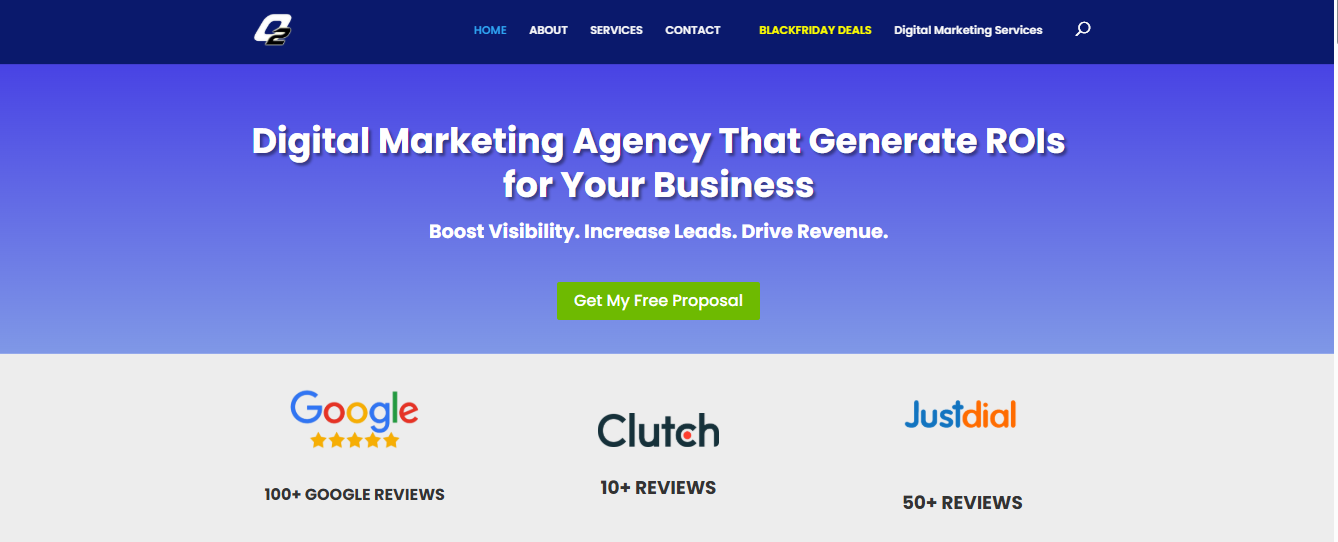
A Trusted Digital Marketing Company in Hyderabad with 13 Years of Excellence Though based in Hyderabad, Oxygen has gained significant traction among businesses in Bangalore for its highly targeted digital marketing solutions. With 13 years of consistent service and excellence, Oxygen has built a solid reputation for offering top-notch services like SEO, Google Ads, social media marketing, content marketing, and more.
Clients consistently praise Oxygen for its transparent communication, results-driven approach, and customized strategies that align with unique business goals.
Oxygen’s commitment to continuous improvement and client satisfaction truly sets it apart. Its seasoned team of digital marketing experts is known for delivering measurable ROI and adapting to the latest trends and technologies. Many businesses in Bangalore prefer Oxygen for its ethical SEO practices, creative content campaigns, and unmatched support.
Contact Details
Itzfizz Digital
Itzfizz
Itzfizz Digital is a founder-led, growth-focused digital marketing agency based in Bangalore, established in 2020 by Sufaiyah and Noor. With a lean team and power partnerships, Itzfizz has delivered 200+ projects across India, the UAE, the UK, and the USA, serving brands like Tipplr, Loyora, Waterstone, Acenteus, Lama Design, HED Media, and more.
Specializing in UI/UX design, web development, SEO, branding, and social media marketing, the agency combines conversion-centric design with data-driven content and agile execution. Clients praise its transparent communication, flexible engagement models, and measurable ROI, which is reflected in a 4.0-star Trustpilot rating.
Whether you’re a startup seeking rapid growth or an established enterprise aiming to optimize digital performance, Itzfizz offers scalable, insight-led solutions tailored to your brand’s DNA.
Contact Details
- Phone: +91 7338376454
- Email: sales@itzfizz.com
- Website: www.itzfizz.com
Digitalclouds
DigitalClouds is a leading digital marketing services provider from HSR Layout, Bangalore , dedicated to helping businesses grow through innovative technology, creative branding, and strategic marketing solutions. As a dynamic digital solutions company, DigitalClouds offers a wide range of development services, including Web Development, Mobile App Development, Software Development, and Plugin & Theme Development, delivering robust and scalable tech solutions.
In the branding space, they excel at UI/UX Design, Logo Design, Video Editing, Motion Graphics, and crafting engaging social media posters. Their marketing expertise spans Digital Marketing, SEO, Social Media Marketing, PPC, and Content Writing, all tailored to boost visibility and drive measurable results. With a strong commitment to quality and customer success, DigitalClouds is your trusted partner for building a strong and impactful digital presence.
Contact Details
Phone: +91 76767 56700
Email: sales@digitalclouds.in
Website: https://digitalclouds.in/
Inbounderz
INBOUNDERZ
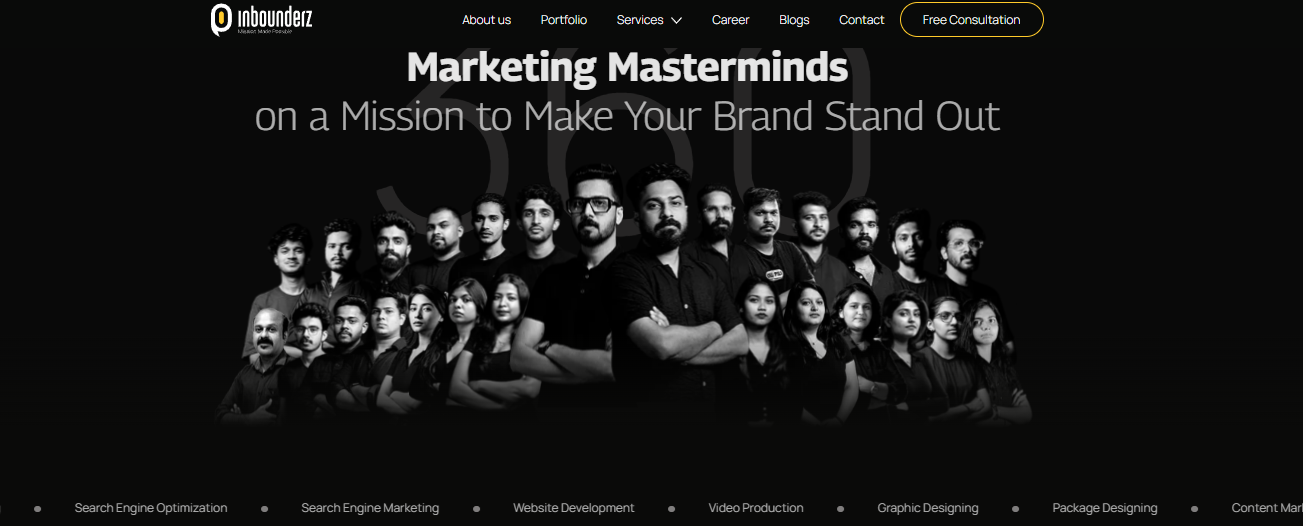
Inbounderz is a creative and performance-driven digital marketing agency based in Bangalore that has built a solid reputation for delivering ROI-focused digital solutions. With a strong focus on strategy and execution, Inbounderz supports businesses of all sizes to enhance their online visibility and achieve measurable growth.
The agency’s expertise spans corporate branding, search engine optimization (SEO), social media marketing, search engine marketing (SEM), and content marketing. What sets Inbounderz apart is its 360-degree digital approach, combining data, design, and technology to deliver impactful marketing outcomes.
Inbounderz also offers specialized services in website development, video production, UI/UX design, and packaging design, positioning itself as a full-service digital partner for brands aiming to scale.
In June 2025, Inbounderz was officially recognized as a Google Partner, further validating its capabilities in paid advertising and campaign performance management.
Clients frequently commend Inbounderz for its strategic thinking, creativity, responsiveness, and consistent delivery, making it one of the most dependable digital marketing agencies in Bangalore.
Contact Details
- Phone: 8147002753
- Email: info@inbounderz.com
- Website: https://inbounderz.com/
Honeycomb
Honeycomb
Honeycomb Creative Support Pvt Ltd., is a full-service creative agency in Bangalore, known for its seamless blend of strategic insight and artistic excellence. . With more than 16 years of experience in the field, the agency is known for producing design-led, high-impact solutions that are both practical and visually striking.
They use an integrated approach to brand building and offer a full range of services, such as web design, UI/UX, digital marketing, SEO, content production, and social media marketing. Additionally, their team combines technical precision and creative finesse under one roof by bringing deep expertise in graphic design, video production, fine-art printing & proofing, and creative staff augmentation.
Clients often mention that they value their methodical processes, attention to detail, and unwavering focus on brand consistency. A large portion of their clientele has remained with them since inception, a testament to their ability to understand business challenges, take ownership, and execute with flair. From concept to delivery, Honeycomb exemplifies a commitment to quality and innovation, making it a trusted partner for businesses seeking a standout digital presence.
Contact Details
Skyram Technologies
Skyram
Skyram Technologies is a results-driven digital marketing company with expertise in education-focused performance marketing and strategic enrollment planning. With a strong command over education-sector campaigns—including lead generation for colleges, coaching centres, EdTech platforms, and online certification providers—Skyram empowers institutions in Bangalore and beyond with tailored digital strategies that fuel admissions growth.
Their strengths lie in education-centric SEO, paid media strategies, student lifecycle marketing, and engagement. They ensure institutes maximize ROI through data-backed, high-converting campaigns. Skyram also excels in CRO (conversion rate optimization), remarketing, and advanced analytics to optimize the digital enrollment funnel from awareness to application.
In addition, their creative services and audience-first content marketing help academic brands build long-term trust and improve student engagement. Known for their consultative approach, education domain knowledge, and consistent results, Skyrim Technologies is regarded as a trusted leader among digital marketing companies specializing in the education sector in Bangalore.
Contact Details
- Phone: +91 96749 90773
- Email: santanu@skyramtechnologies.in
- Website: www.skyramtechnologies.com
Beta Digital marketing agency
BETADIGITALMARKETING
Beta Marketing Agency has carved a niche in the Bangalore digital marketing landscape with a reputation for innovation and performance. It is known for delivering data-driven results and specializing in performance marketing, SEO, content marketing, and social media strategies. Beta Marketing Agency is a digital marketing company in Bangalore specializing in data-driven online marketing services.
Clients commend the company’s proactive approach, timely delivery, and strong customer support. The agency’s continuous optimization and in-depth analytics make it a go-to choice for companies looking for scalable growth and online visibility.
Contact Details
- Phone: +91 9513999901
- Email: hello@betadigitalmarketing.com
- Website: https://betadigitalmarketing.com
Digital Adworks
Digital Adwork
Digital Adworks has built a strong reputation in the digital marketing landscape by delivering results-driven services across various platforms. With a proven track record of completing over 3,000 projects, they demonstrate extensive experience and expertise in the field.
Their services include web design, logo and branding, Google Ads management, Facebook Ads management, Instagram Ads management, and social media management, helping businesses establish a robust online presence.
Additionally, they offer WhatsApp marketing and influencer marketing solutions, enabling brands to engage with audiences through modern, high-converting channels. Their focus on innovative strategies, creative design, and targeted campaigns makes them an excellent partner for businesses seeking impactful digital marketing solutions.
Contact Details
- Phone: 88921 87853
- Email: connect@digitaladworks.com
- Website: https://digitaladworks.com/
Channelsoftech Pvt. Ltd.
channelsoftech
Channelsoftech is a Bangalore-based digital marketing company with over 20 years of industry expertise. With a 30+ member team and 5000+ projects delivered, they offer end-to-end solutions including SEO, Google Ads, social media marketing, website development, and branding.
Known for their result-oriented strategies, transparent approach, and consistent performance, Channelsoftech has earned a 4.8★ Google rating and continues to be a trusted partner for businesses looking to grow their digital presence.
Contact Details
Phone: 9845 6621 83
Email: info@channelsoftech.com
Website: https://www.channelsoftech.com/
RankHawn
Rankhawn
RankHawn has emerged as a results-driven digital marketing partner, delivering scalable growth solutions for businesses across industries. Established in 2018, this fast-growing company has served leading brands such as BigBasket, 1mg, PharmEasy, GoDigit, and BharatPe, showcasing its expertise in managing high-impact campaigns.
Their core services include SEO (on-page, off-page, technical SEO, and international SEO), eCommerce SEO, local SEO, and digital PR, along with AI-powered automation for marketing efficiency. RankHawn also excels in content marketing, performance ads, and social media campaigns, using data-driven strategies to fuel measurable business results.
With a 98.8% project success rate and a reputation for delivering SEO-led full-stack marketing solutions, their approach is deeply rooted in business outcomes rather than just service delivery. Their expert-led team ensures swift execution, while AI-driven tools enhance campaign efficiency. RankHawn’s strong focus on KPIs, combined with proven success across unicorns and emerging startups, makes them a highly trusted digital growth partner in the competitive digital marketing space.
Contact Details
Phone: +919079220214
Email: info@rankhawn.com
Website: https://rankhawn.com/
Welix Digital
Welix.in
Welix Digital is a dedicated digital marketing agency known for its specialized services in social media marketing, PPC (pay-per-click), and website development. They excel at crafting creative and impactful marketing campaigns that help businesses boost their online presence and drive targeted traffic.
Their social media marketing strategies are tailored to engage audiences effectively across platforms, while their PPC campaigns are designed for maximum return on ad spend through precise targeting and performance optimization. Additionally, their website development services focus on creating user-friendly, high-performing websites that complement marketing efforts. Welix’s commitment to innovation and result-oriented campaigns makes them a strong player in the digital marketing landscape, making their services highly relevant for businesses seeking comprehensive digital solutions.
Contact Details
Phone: +91 70901 70524
Email: hello@welix.in
Website: https://www.welix.in/
conclusion
In today’s competitive digital marketplace, selecting the correct digital marketing company is critical to business growth. The agencies listed above—led by Oxygen, a highly experienced digital marketing company based in Hyderabad—represent some of the best digital marketing companies serving Bangalore. These companies bring unique strengths, from SEO and social media marketing to performance advertising and branding solutions.
Whether you’re a startup looking to establish your online presence or a growing enterprise aiming to scale your digital reach, partnering with any trusted agencies can help you achieve measurable and sustainable success. Your business can stand out and thrive in the ever-evolving digital marketplace with the right strategy and expert support.
FAQS
1. What services do top digital marketing agencies in Bangalore offer?
A. Leading digital marketing agencies in Bangalore typically offer search engine optimization (SEO), Google Ads (PPC), social media marketing, content marketing, web design, branding, and performance marketing services.
2. How do I choose the right digital marketing company in Bangalore?
A. Look for an agency with proven results, client testimonials, a strong digital presence, and services aligned with your goals. Experience, creativity, and transparency are key factors when selecting the best partner.
3. Is digital marketing affordable for small businesses?
A. Many digital marketing agencies in Bangalore offer flexible pricing and packages suitable for startups and small businesses. Companies like Cubikey Websites and BLeap Digital are known for delivering affordable, ROI-driven marketing solutions.
4. In what time frame can you anticipate seeing outcomes from digital
marketing?
A. The timeline varies depending on the strategy. SEO typically takes 3–6 months to show significant results, while PPC and social media campaigns can yield quicker outcomes. Consistent efforts and analytics help refine performance over time.
5. What should I expect during my first few months working with a digital
marketing agency?
A. The agency typically performs audits, strategy development, competitor analysis, and initial campaign setup in the initial months. You’ll start seeing early indicators of success—like traffic increase or improved engagement—with clear reporting and ongoing optimization. Results, especially in SEO, build over time with consistent effort.
by Shashikanth Heerekar | Jun 14, 2025 | All Things about Marketing
Discover inbound vs. outbound marketing B2B strategies. Learn which approach drives better leads, sales, and business growth.
Introduction
B2B marketing is how one business sells to another. It helps companies work together to grow. We use B2B marketing strategies to tell other businesses about our services. Good B2B communication builds trust. Big companies use different ways to reach other businesses. Let’s learn the main parts of B2B marketing approaches below.
Understanding Inbound Marketing in B2B
What is Inbound Marketing?
Inbound marketing is when companies make cool social media postings, videos, and blogs to attract other businesses. It’s like making a super fun playground and inviting others to play. In B2B, inbound marketing is used to help other companies to learn and get excited. They don’t push their stuff; they make you want to come alone. This is the big difference between outbound and inbound marketing. Inbound marketing vs outbound is like asking someone nicely versus yelling from a truck. The inbound versus outbound way is softer and smarter for business. So, inbound or outbound, companies pick what works best!
Key Components (Content, SEO, Email Nurturing)
Let’s talk about the tools! First, there’s content like blog posts and videos. These teach others cool stuff and make them want to work with your business. Then comes SEO, which is magic to help others find you on Google. If someone types a question, SEO helps your page pop up. That’s super helpful for inbound and outbound digital marketing. Last is email nurturing. This means sending friendly emails to businesses who might buy later. You help them and don’t just shout, “Buy now!” That’s the nice part of inbound vs outbound marketing. You’re a friend, not a pushy seller. So, remember: inbound marketing vs outbound marketing is about being helpful and not noisy.
Benefits of Inbound Marketing for B2B
The best thing about inbound marketing is that it brings the right people to you. It’s like having a lemonade stand; all the thirsty people just come. Businesses love it because they don’t waste time on folks who aren’t interested. It builds trust and saves money. That’s a big difference between inbound and outbound ways. Inbound marketing vs outbound is cheaper, smarter, and works longer. While outbound and inbound help, inbound gives you better friends in business. That’s why many companies now pick inbound versus outbound marketing every time.
When Should B2B Businesses Use Inbound Marketing?
Use inbound marketing when you want to make friends first before selling. It works best when selling takes time and trust. If your stuff is expensive or tricky, inbound vs outbound wins because it teaches and explains. For new businesses or launching new products, go inbound marketing vs outbound marketing to get known. But don’t forget, sometimes a mix of inbound and outbound is good. Like peanut butter and jelly, both inbound and outbound can work together. Just pick the one that fits your story best.
Understanding Outbound Marketing in B2B
What is Outbound Marketing?
Outbound marketing is the process by which a business contacts others first. It’s like knocking on a door and saying, “Hey, want to buy this?“ In B2B, the business goes after other companies instead of waiting for them to come. That’s the big thing in inbound vs outbound marketing. In marketing, inbound vs outbound, inbound is quiet and smart, while outbound is loud and direct. Some people like one better, but both can work. So when we think of outbound or inbound, we ask which helps us reach the right business.
Examples (Cold Emails, Ads, Direct Mail, Telemarketing)
Let’s look at marketing outbound and inbound examples. One is cold emails, where businesses email others without being asked. Then, there are ads, like on websites or social media. They pop up to grab your attention. Next is direct mail—yes, letters in the mailbox! Finally, we have telemarketing, where someone calls to discuss a product or service. These are clear outbound vs inbound examples. With outbound and inbound marketing, the outbound side always reaches out first. So when someone asks, “What is the difference between outbound and inbound marketing?” it’s like chasing vs inviting.
Benefits of Outbound Marketing for B2B
Outbound marketing helps B2B companies reach a lot of people quickly. It’s good when you need fast results. Outbound can tell many businesses fast if you’re selling something new or have a special deal. That’s why outbound is best for quick action in the difference between inbound and outbound. In marketing inbound vs outbound, the outbound way makes more noise. And noise means attention! But remember, too much noise can bother people. So, inbound and outbound marketing, be smart and use both sometimes. It’s not always about picking inbound vs outbound marketing but using both correctly.
When Should B2B Businesses Use Outbound Marketing?
Use outbound marketing when you want fast attention. If you’re launching something new or want to reach more businesses quickly, go with outbound vs inbound. When people don’t know your brand yet, outbound helps them learn fast. It’s like waving your hands in a crowd, saying, “Look at me!“ In the world of inbound & outbound marketing, there’s no one-size-fits-all. Some situations need outbound marketing vs inbound marketing—like when you don’t have time to wait. So don’t worry too much about outbound and inbound marketing—pick what works for your business now.
Key Differences Between Inbound and Outbound Marketing
Inbound marketing is like playing with your friends and letting them come to your house when they want. Outbound marketing is like knocking on everyone’s doors and asking them to play. In business, this is the big thing about inbound vs outbound marketing. With inbound marketing and outbound marketing, you let others find you. You make cool blogs, videos, and fun things so they want to come to your website. But with outbound marketing, you send emails and ads and even call people to tell them about your stuff.
When discussing inbound and outbound marketing, we see that one is soft and the other is strong. Inbound tactics are slow, but make friends. Marketing outbound is fast but can be loud. That’s why businesses use both inbound and outbound marketing together. It’s like mixing ketchup and mustard – it just works better! Some days, you need outbound and inbound; other times, just one.
People always ask, “Which is better, inbound or outbound marketing?“ Well, it depends! If you want to teach and help first, use inbound marketing outbound. If you’re telling many people fast, use outbound marketing vs inbound. Some smart businesses mix it up with marketing inbound and outbound tricks. They blog and also send emails. That’s what we call outbound marketing and inbound marketing.
The real answer to outbound vs. inbound marketing is this: don’t pick just one. Mix them. Use them together like a peanut butter and jelly sandwich. That’s how grown-up companies do inbound vs. outbound the smart way. Whether outbound marketing means pushing info out or inbound versus outbound marketing bringing people in, both are important in inbound and outbound business fun.
Which Strategy is Better for Your B2B Business?
If you are wondering whether to use outbound or inbound, don’t worry—it’s like picking your favourite superhero. Both can be awesome, depending on the job. In B2B, some companies like inbound marketing because it’s calm and friendly. Others choose outbound because it’s fast and loud. So, outbound vs inbound depends on what kind of business you have.
Let’s think about what inbound and outbound marketing is. Inbound means you share blogs, videos, and helpful tips so people come to you. That’s why people love inbound marketing examples like tutorials or guides. But outbound means you go out and find people—by calling, emailing, or showing ads. That’s why we see outbound marketing examples like TV ads or cold calls.
Still confused? Let’s ask again: what is inbound marketing vs outbound marketing? Simple! If you want people to find you, go inbound. If you want to find people first, go outbound. That’s the big difference between inbound marketing and outbound marketing. Or, as my teacher says, the difference between inbound and outbound is in who makes the first move.
Some companies use both. That’s called inbound & outbound marketing or inbound outbound. Using both helps you get more customers. It’s like using both a fishing rod and a net—you catch more fish! And hey, the smart way is to look at your business and ask: “Do I need outbound marketing, inbound marketing, or both?”
So, whether it’s sales inbound vs outbound or just outbound vs inbound marketing, the answer depends on your goal. There’s no one-size-fits-all. Try inbound if you sell something fancy and must explain it a lot. If you need quick attention, go outbound. Or do both and win.
Case Studies & Real-World Examples
Successful B2B Inbound Campaign
Let’s look at a cool inbound marketing story! A big custom software development company wanted to help businesses fix problems Instead of calling people, they made a blog and videos. These were fun and helpful, and guess what? Other companies started visiting their website to learn! That’s how inbound marketing is done right. This is a perfect inbound example of how being helpful works better than shouting. They didn’t chase anyone. They let the customers come. That’s what inbound marketing means—attracting people by being nice! So, now we can answer the following questions: What are inbound and outbound marketing? Inbound is where they come to you. And that’s the inbound vs outbound truth.
Effective B2B Outbound Tactics
Now, let’s look at outbound marketing. Another business needed fast sales. They used emails, phone calls, and ads. That’s what we call outbound inbound marketing. They reached out to people first. These are classic outbound marketing examples. It worked! People noticed the brand, and some bought the product. That’s what defines outbound marketing—reaching out first. So now we know what outbound marketing is—it’s like saying, “Hey! Look at this!” That’s a big difference between outbound and inbound marketing. So, if you’re thinking of inbound or outbound meaning, remember: outbound is loud, and inbound is soft. They both work in their way!
Hybrid Strategy Success
Let’s talk about a mix of both—inbound and outbound together! A company made cool blogs and guides (inbound), sent emails, and placed ads (outbound). That’s what we call a hybrid strategy or marketing inbound outbound. It’s like using a net and a fishing pole. They got lots of leads! This is how smart businesses win using both inbound marketing and outbound methods. So, the big inbound-outbound difference is how you start the talk. But if you mix both, you get the best results! Now you know the real difference between inbound and outbound sales.
conclusion
Inbound vs. outbound sales is like being a helper or a chaser. With marketing inbound vs. outbound, some businesses teach, and others shout. Outbound and inbound meanings are simple: one gives information and grabs attention. Knowing the definition of marketing inbound helps a lot. So, mix both! That’s the best way to go in outbound marketing vs. inbound strategies.
FAQs
Is inbound marketing more effective for B2B startups?
Yes! For B2B startups, inbound marketing helps build trust by sharing blogs, guides, and videos. It costs less than ads and generates real interest. That’s why inbound marketing often wins over outbound in the early stages. Both help, but startups usually start with inbound to grow smarter.
Can outbound marketing still work in 2025?
Absolutely! Even in 2025, outbound marketing, like emails and calls, can still get attention fast. While some love inbound marketing, others still need direct contact. The key is doing outbound vs. inbound the right way—don’t be annoying; be helpful! That’s what makes outbound sales vs. inbound successful today.
How do you balance both strategies in a B2B plan?
Mix it up! Use inbound to educate and attract customers and outbound to follow up and close deals. That’s the secret behind sales inbound vs. outbound success. Businesses win when they blend the power of both. Balancing inbound vs. outbound marketing helps you cover more ground in your plan.
What are some examples of inbound and outbound marketing?
Examples of inbound marketing include blogs, SEO, and helpful videos. Examples of outbound marketing are cold emails, ads, and phone calls. This shows the real inbound and outbound difference. Both tools are used by smart businesses, depending on their goals and how fast they want results.
What is the difference between inbound and outbound sales?
There is a straightforward distinction between incoming and outbound sales. Inbound waits for leads, while outbound waits to find leads. Think of inbound vs. outbound sales as fishing with bait versus casting a net—both work in different ways and at other times.
by Shashikanth Heerekar | Jun 9, 2025 | Digital Marketing
Find the best digital marketing training institutes in Hyderabad with expert faculty, real-time projects, and 100% placement support in 2025.
Introduction
In 2025, are you trying to find the top digital marketing school in Hyderabad? You’re in the right place! Hyderabad has become a digital hub where students, freshers, and working professionals are actively seeking top-notch training in digital marketing. From SEO and social media to PPC, content marketing, and email strategies, digital marketing offers a wide career scope in today’s fast-paced online world.
In this article, I’ve covered the top digital marketing institutes in Hyderabad that not only offer expert-led training but also provide placement support, real-time projects, and industry-recognised certifications. Whether you’re starting your career or upgrading your skills, these institutes can guide you toward success in the digital space.
1. ODMT
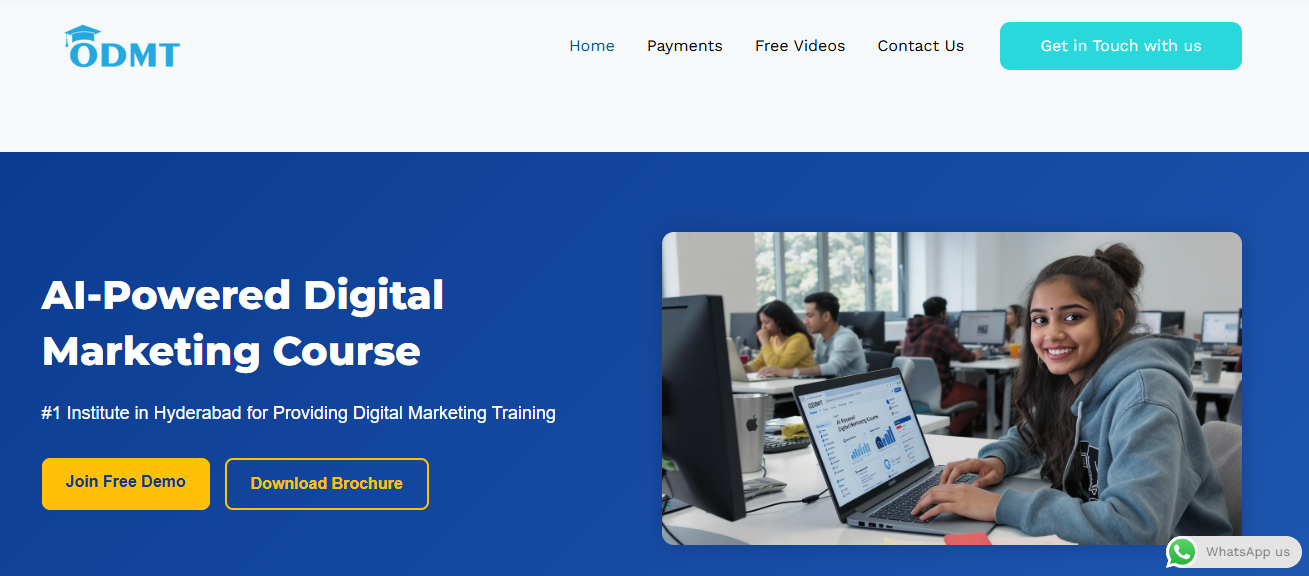 ODMT is a modern digital marketing training institute located in Alwal, Hyderabad. Established in 2018, ODMT stands out for offering AI-powered digital marketing courses specifically tailored for the Telugu-speaking audience. With a mission to create 10,000 jobs by 2025, the institute focuses on practical, hands-on learning using both traditional and cutting-edge tools.
Their flagship program, the Digital Marketing Course in Telugu, is designed for students, job seekers, entrepreneurs, and homemakers alike. The course includes essential marketing strategies such as SEO, Google Ads, and YouTube, alongside training in over 100 modern AI tools like ChatGPT, Gemini, Claude, Grok, DeepSeek, Jasper, and Midjourney. With classes available in English and Hindi as well, ODMT ensures accessibility and relevance for all learners.
Location: Alwal, Hyderabad
Courses Offered
Key Highlights
-
AI-Powered Digital Marketing Course
-
Tailored for Telugu Audience
-
Practical Learning with Real Tools
-
100+ AI Tools Covered
-
100% Placement Assistance
-
Classes in Telugu, English, and Hindi
Contact Details
Phone: 7386603165
Email: subhashmangalam786@gmail.com
Website: www.odmt.in
2. Oxygen
Oxygen is a popular digital marketing company in Hyderabad with over 11 years of experience. While it doesn’t run regular training classes, the company helps students and freshers by offering internship opportunities. These internships allow learners to work on real digital marketing projects like SEO, social media, and content marketing. With expert support and a practical work environment, Oxygen gives interns a chance to learn real skills that are useful for jobs in the digital marketing field.
- Location: Esamia Bazar, Koti, Hyderabad
Contact Details
3. Munthasoft
Unlock Growth with Munthasoft – Hyderabad’s Trusted Digital Partner.
Looking to level up your career or scale your business online?
Munthasoft, based in Hyderabad, is your go-to destination for IT training, digital marketing services, and business growth solutions – all under one roof.
Whether you’re a student, job seeker, or business owner, Munthasoft empowers you with:
- Expert-led training in SEO, Google Ads, social media marketing & web analytics
- Hands-on, career-focused IT training
- Professional digital services that drive real results
With a strong focus on performance + proficiency, They help you learn faster, grow smarter, and succeed digitally.
Location: Hyderabad
Let’s grow together with Munthasoft – Learn. Market. Dominate.
Courses & Services Offered
- Software Courses
- Digital Marketing
- MS-office
- software solution
- Graphic Designing
- Online Publishing
- Outsourcing Services
- Google Maps Services
Contact Details
4.Digital Vidya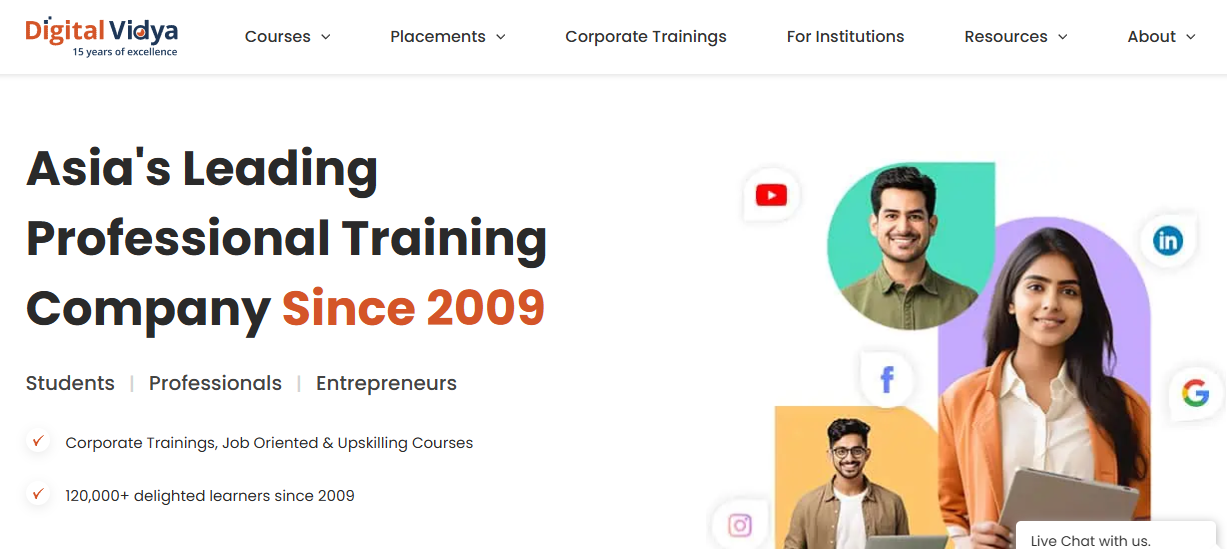
Digital Vidya has been a pioneer in digital marketing training since 2009. It is recognised globally and offers flexible learning with a mix of online and offline teaching methods. Their strong alumni network and placement assistance have helped thousands of students launch successful careers in digital marketing. The trainers bring real-world insights into every session, making the learning process highly practical and engaging.
Location: Banjara Hills, Hyderabad
Courses Offered
- Digital Marketing Master Course
- SEO & SEM Certification
- Social Media Marketing
- Email Marketing & Automation
- PPC Advertising
- Content Marketing Strategies
- Web Analytics & Data-Driven Marketing
Contact Details
5. Saisantosh Technologies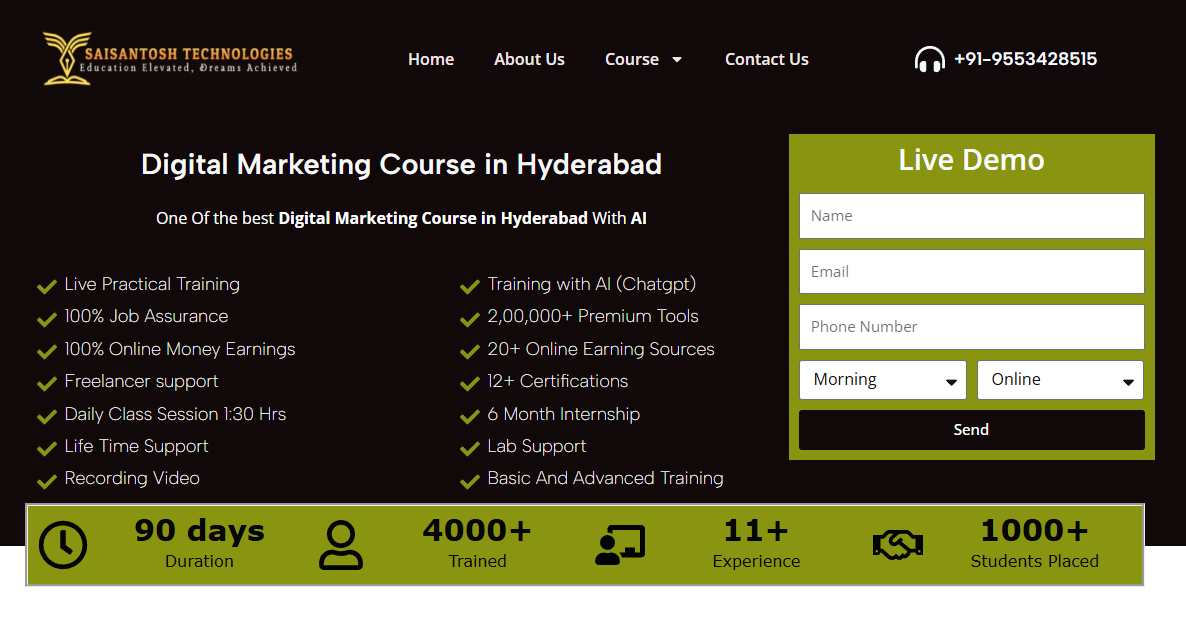
Saisantosh Technologies is a reputable training center for digital marketing situated in Ameerpet, Hyderabad. Since its establishment in 2014, the institute has been committed to offering quality education with a strong focus on real-time, practical learning. Their digital marketing program is designed to provide in-depth knowledge of SEO, SMO, PPC, and other essential digital marketing skills. With a student-first approach, they offer flexible fee options, personalized training, and full placement support. Whether you’re a student, job seeker, or professional looking to switch careers, Saisantosh Technologies equips you with the tools and knowledge to succeed in today’s competitive digital landscape.
Location: Ameerpet, Hyderabad
Courses Offered
- Digital Marketing
- PPC Course
- SMO Course
- SEO Course
Key Highlights
- 100% Placement Assistance
- Fully Practical Training
- Flexible Fee Structure
- Live Projects and Case Studies
- Experienced Trainers
Contact Details
6. W3 Web School
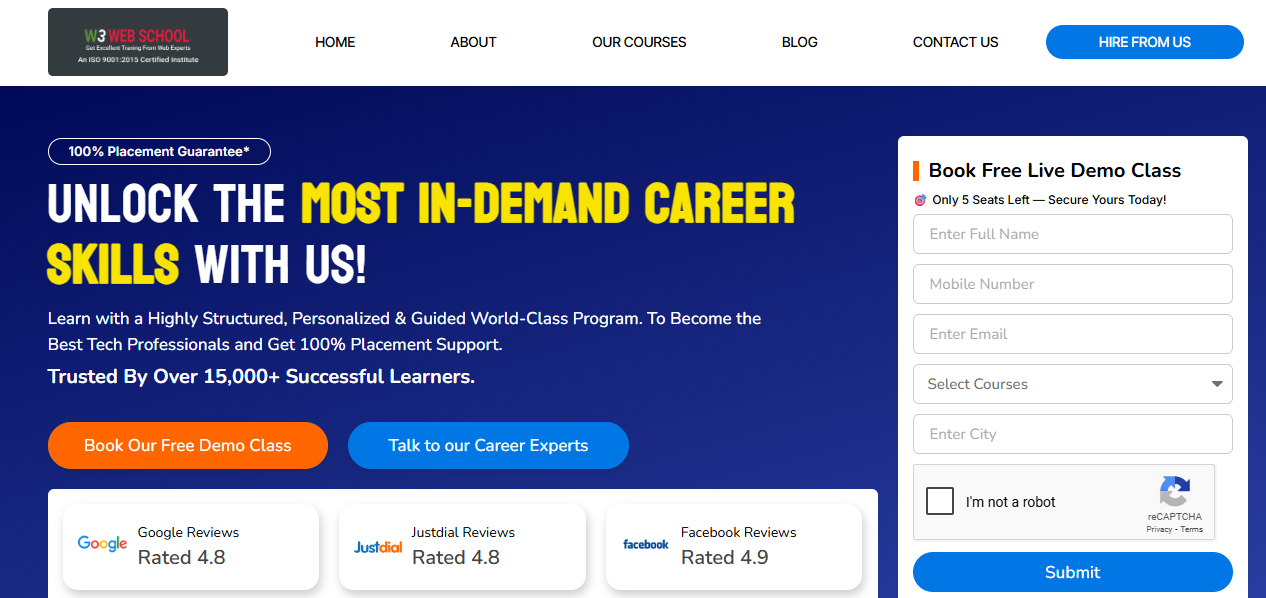
W3 Web School is a leading IT training institute offering online courses in Hyderabad with a strong reputation for quality education and industry-ready skills. Although based in Kolkata, the institute has made its mark across India by providing expert-led online training in Digital Marketing, Web Development, Graphic Design, UI/UX Design, and more. Established in 2012, W3 Web School stands out for its highly experienced trainers, practical approach, and 100% placement support. With live project-based learning and personalized guidance, students from Hyderabad and beyond gain real-world skills from the comfort of their homes, all at affordable fees.
Location: 214/1 Dumdum Road, Kolkata 700074 (Online courses available in Hyderabad)
Courses Offered
- Digital Marketing
- Web Development
- Graphic Design
- UI/UX Design
Key Highlights
- ISO-certified Institute
- 100% Placement Assistance
- 1:1 Mentoring
- 24×7 Online & Training Support
- 99% Practical Approach
- Industry-led Course Guidance
- Expert Trainers & Personalized Guidance
- Live Projects and Career-Focused Learning
Contact Details
7. Digital Floats
Floats is a premier digital marketing training institute located in Ameerpet, Hyderabad. Known for offering advanced and practical digital marketing courses, the institute focuses on real-time implementation and industry-relevant skills. Since its inception, Digital Floats has trained numerous students, freshers, and professionals, helping them build successful careers in the digital domain. With expert trainers, live project experience, and lifetime access to updated content, Digital Floats ensures students are well-prepared for the dynamic digital marketing industry.
Location: Ameerpet, Hyderabad
Courses Offered
- Advanced Digital Marketing
- Search Engine Optimization (SEO)
- Google Ads & Analytics
- Social Media Marketing (SMM)
- Affiliate & Email Marketing
Key Highlights
- 100% Placement Assistance
- Live Project Implementation
- Lifetime Access to Course Content
- Google Certifications Included
- Free Domain & Hosting
Contact Details
8. Ramit Solutions
Ramit Solutions is a top-rated digital marketing agency and training institute based in SR Nagar, Hyderabad. Established in 2012, the institute offers a complete 360° digital marketing training experience designed to help students, professionals, and entrepreneurs build successful careers and businesses. With a strong focus on live projects, real-time tools, and expert mentorship, Ramit Solutions has trained over 3000+ students, many of whom are now working with leading MNCs or as successful freelancers. The institute is led by a mentor ranked among the Top 100 Digital Marketing Experts in India (Google Database, 2015), ensuring high-quality, industry-relevant learning.
Location: SR Nagar, Hyderabad
Courses Offered
Key Highlights
-
Established in 2012
-
Live Projects & Internship Opportunities
-
Certifications from Google, HubSpot & more
-
Personalized Mentorship from Top 100 DM Experts
-
100% Job Assistance & Freelancing Support
-
Trusted by 200+ Businesses
Contact Details
📞 Phone: 8309329496
🌐 Website: www.ramitsolutions.com
📧 Email: ramitsolutionsindia@gmail.com
9. Digital Explore
 Digital Explore is a trusted digital marketing training institute located in Ameerpet, Hyderabad. Established in 2019, the institute is known for its commitment to quality education, personalized mentorship, and career-focused learning. With a vision to empower students through globally-relevant training, Digital Explore offers industry-standard digital marketing programs guided by experienced faculty. Their student-centric approach and strong support services make it an ideal destination for learners aiming for both academic and professional success.
Location: SAP Street, Ameerpet, Hyderabad
Courses Offered
Key Highlights
-
Established in 2019
-
Industry-Relevant Curriculum
-
Experienced Faculty with Real-World Knowledge
-
Customized Learning Plans
-
Global Exposure & International Admission Guidance
-
Career-Oriented Training with Placement Support
-
Strong Focus on Student Growth & Mentorship
Contact Details
📞 Phone: 9652692828
🌐 Website: www.digitalexplore.in
📧 Email: info@digitalexplore.in
Why Practical Training and Placement Support Matter
All these institutes focus heavily on practical training, which is crucial in digital marketing. Theoretical knowledge alone is not enough to succeed in this field. Hands-on projects and internships allow students to understand how to plan, execute, and analyse marketing campaigns effectively.
Placement support is also very important because getting the right job after training is the ultimate goal for most students. These institutes help with resume building, interview preparation, and connecting students with potential employers.
Conclusion
If you want to learn digital marketing in Hyderabad in 2025, institutes like ODMT, Oxygen, Digital Vidya, Saisantosh Technologies, W3 Web School, and Digital Floats are some of the best choices. They offer updated courses, expert trainers, practical experience, and good placement support. By choosing the right institute, you can gain valuable skills and start a successful career in digital marketing.
FAQs About Digital Marketing Institutes in Hyderabad
1. Which is the best digital marketing institute in Hyderabad for practical training?
ODMT and Digital Floats are known for their strong practical training programs. They offer real-time projects, live tools, and even AI-powered modules to help students gain hands-on experience. This practical
2. Do these institutes provide placement support after course completion?
Yes, most top institutes like ODMT, Saisantosh Technologies, and Digital Vidya provide 100% placement assistance. They help with resume building, mock interviews, and job connections. This kind of support greatly improves your chances of securing a job after training.
3. Do any institutes offer internships as part of the digital marketing course?
Yes, Oxygen is one of the few companies that offers internship opportunities instead of regular training classes. These internships allow students to work on real digital marketing projects like SEO, content marketing, and social media. It’s a great way to gain practical experience and boost your resume while learning directly from industry professionals.
4. Are the courses updated to keep up with the latest digital marketing trends?
Yes, institutes like ODMT, Digital Vidya, and Digital Floats regularly update their curriculum. They include modern tools like ChatGPT, Gemini, and Google Ads along with new marketing strategies to ensure students are job-ready.
5. Is online training available for students outside Hyderabad?
Yes, W3 Web School offers online training across India, including Hyderabad. Their expert-led virtual sessions, 1:1 mentoring, and 24/7 support ensure quality learning from home. Some other institutes like Digital Vidya also provide flexible online course options.