by Shashikanth Heerekar | Feb 3, 2026 | Insights
Introduction
This situation can be stressful. You may have skilled staff, modern equipment, and happy patients, yet new people are not finding your clinic as often as you expect. That is where lead generation makes a real difference.
Lead generation is about helping the right people discover your clinic at the right time. It focuses on visibility, trust, and easy communication. When people feel confident and informed, they book appointments without hesitation.
A clear lead generation process removes confusion and makes it easy for patients to take the next step. Over time, this creates a steady flow of inquiries and helps your clinic grow without constant worry.
In this guide, I explain everything in very simple words. We keep it practical and friendly. I share real methods that clinics use today to attract people from search engines, social media, and local areas.
Understanding Who Needs Dental Care
When we understand who needs dental care and why, we can create marketing that reaches the right people, builds trust, and turns interest into real appointments. Different people look for dental services for different reasons; some need urgent care, while others plan treatments over time. By knowing their needs, we can share the right information at the right moment.
Common Types of Dental Patients
For instance:
- Parents looking for dental care for children
- Adults searching for braces or aligners
- People in pain who need immediate treatment
- Patients interested in improving their smile
Each group behaves differently online. Some people act fast, while others research before booking. When we understand this clearly, it becomes easier to generate leads for business that turn into real appointments.
For instance, someone in pain may call immediately, while someone looking for cosmetic treatment may read blogs or watch videos first.
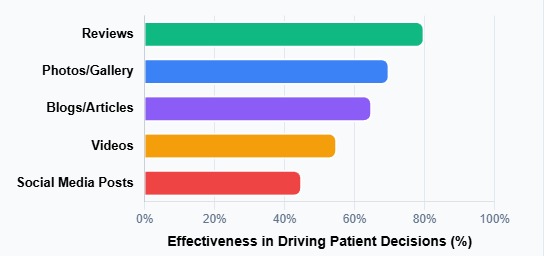
This graph explains that reviews (80%) are the most effective content type, followed by photos/galleries (70%) and blogs/articles (65%). Videos (55%) have a moderate impact, while social media posts (45%) show comparatively lower effectiveness.
Online Marketing Strategies for Dental Clinics
1. Effective Online Strategies for Dental Lead Generation
Today, most people look online before choosing a clinic. They search for treatments, check reviews, compare options, and often decide which clinic to contact first. That is why online methods are very important; they help your clinic show up when people are actively looking for dental care.
Let us break this down in a simple way.
For instance, by using search engines, social media, and performance campaigns correctly, you can reach the right people at the right time. These strategies make it easier for potential clients to find you, trust your services, and book appointments without delay.
2. Search Engine Optimization (SEO) for Dental Websites
Appearing in these searches makes it easier for potential clients to find your clinic quickly. It also increases the chances that they will trust your clinic over others because top search results seem more reliable. Over time, SEO helps your website attract steady traffic, meaning more inquiries and appointments without constantly spending on ads.
What We Focus On
We improve:
- Service pages like cleaning, braces, and implants
- Location-based content
- Dental clinic nearby
- Emergency dental care
Clear answers to common patient questions
What We Focus On
We improve:
- Service pages like cleaning, braces, and implants
- Location-based content
- Clear answers to common patient questions
This builds trust with search engines and brings steady traffic. Many demand generation companies rely on SEO because results grow over time without paying for every visitor.
3. The Power of Social Media Marketing
Social media helps people feel comfortable and confident before visiting your clinic. Today, many patients check Instagram, Facebook, or other platforms to see the clinic, meet the dentist, and view real treatment results.
This supports online lead generation by turning viewers into inquiries. When done correctly, social media becomes a strong source of digital marketing leads.
For example, short videos showing treatments, before-and-after photos, or simple oral care tips make your clinic feel approachable and trustworthy. Social media also allows you to answer questions directly, respond to comments, and show the personality of your team.
What Works Well
For instance:
- Short videos explaining treatments
- Before-and-after photos
- Patient feedback
- Simple oral care tips
Offline Lead Generation Techniques
Offline methods still work very well, especially for local clinics. While online marketing brings inquiries from search engines and social media, many people still trust recommendations, local events, and in-person interactions.
Effective Offline Ideas
For example:
- Referral rewards for existing patients
Free dental checkup camps
- Partnerships with schools or offices
Flyers in nearby residential areas
People trust recommendations from people they know. That is why offline methods still bring quality inquiries. When offline and online efforts work together, results become stronger.
How to Plan Performance Marketing Campaigns for Dental Clinics
Many clinics run ads but do not see results because there is no clear plan. They spend money on multiple platforms without knowing which one brings real inquiries. Let me explain this in a simple way.
Our Simple Approach
To make performance marketing work effectively, we focus on a few key steps:
- One clear goal: Decide whether the campaign’s main goal is phone calls, form inquiries, or appointment bookings. This keeps all marketing efforts focused.
- One platform at a time: Instead of spreading ads thin across many channels, we choose the platform that works best for the audience, such as Google Ads or Facebook Ads.
- One focused landing page: Every campaign should lead to a clear page where visitors can take action immediately. For example, a page with a simple booking form and contact details works best.
- Proper tracking of every inquiry: Each call, message, or form submission is tracked. This tells us which campaigns are working and where to improve.
This approach helps clinics avoid wasted money and focus on results. For example, instead of paying for clicks that never convert, the clinic invests in campaigns that bring actual appointments. A professional lead generation agency always measures outcomes, not just traffic numbers
Conclusion
Lead generation for a dental clinic is not about shortcuts or quick fixes. It is about creating a system that works consistently over time.
When search visibility, social trust, paid campaigns, and local efforts work together, clinics grow steadily. Patients feel confident choosing your clinic because they see your expertise and reliability online and offline.
Consistency is key. By following a clear strategy, marketing efforts compound over time. More people discover your services, the more inquiries turn into appointments, and your clinic develops a steady, predictable flow of new clients.
FAQs
1. How fast can dental lead generation show results?
Ans. Paid ads can bring inquiries within a few days or weeks because they target people actively searching for dental services. SEO takes longer—usually a few months—but it builds long-term visibility, bringing consistent leads without paying for every click. Combining both methods ensures you get both quick results and sustainable growth.
2. Is social media important for dental clinics?
Ans. Yes. Social media helps patients feel familiar and confident before visiting your clinic. Sharing videos, tips, testimonials, and behind-the-scenes content builds trust. Patients often check social media to see your expertise, the clinic environment, and real results, which increases the chances they will book an appointment.
3. Should clinics work with experts?
Ans. Working with experienced teams or a lead generation agency can save you time and money. Experts know how to target the right audience, create effective campaigns, and track results properly. This prevents wasted ad spend and ensures every marketing effort contributes to real appointments.
4. Which platform gives the best dental leads?
Ans. Google Search usually works best for urgent or high-intent needs, like emergencies or immediate treatments. Social media platforms, like Facebook and Instagram, are great for building awareness, educating patients, and showcasing results. The right mix depends on your clinic’s goals and target audience.
5. Can small clinics afford lead generation?
Ans. Yes. Even small budgets can work when campaigns are planned carefully. Focusing on high-intent searches, local targeting, and simple social campaigns ensures you get inquiries without overspending. Consistency and strategy matter more than big budgets.
by Shashikanth Heerekar | Feb 2, 2026 | Insights
Introduction
Digital marketing is very important for local businesses today. Most people search online before buying anything nearby. If a business is not visible online, customers may choose competitors. Digital marketing helps local shops grow, attract nearby customers, and compete with big brands using simple and affordable online methods.
The Current Landscape of Digital Marketing Near Me: Trends and Statistics
Digital marketing near me is growing quickly as businesses move online. Local searches, online ads, and social media play a big role in customer decisions today.
Growth of Local Online Searches
People often search terms like “digital marketing agency near me” or “marketing companies near me” on Google. These searches show strong buying intent. Local businesses that appear in search results get more calls, visits, and trust because customers prefer nearby digital marketing companies and service providers.
Rise of Digital Marketing Companies in Cities
Cities like Hyderabad have seen fast growth in digital marketing companies, digital marketing firms, and advertising agencies in Hyderabad offices. Many startups and small businesses prefer local agencies because they understand local customers, language, and market trends better than big national firms.
Increasing Demand for Digital Marketing Services
More businesses now want digital marketing services like SEO, social media ads, and Google Ads. This increases demand for digital marketing service providers and digital marketing services firms, especially for small businesses looking for affordable online promotion with clear results.
Trust in Best and Top Agencies
Businesses look for quality and experience. That is why searches like “best digital marketing agency,” “top digital marketing companies,” and “best digital marketing firm” are common. People trust agencies with strong reviews, case studies, and proven success in local digital marketing campaigns.
Key Benefits of Utilizing Local Digital Marketing Strategies
Local digital marketing gives many benefits to small and medium-sized businesses. First, it helps businesses reach nearby customers easily through searches like “digital marketing near me” or “digital marketing company near me.” This brings more local leads and real customers.
Second, local digital marketing is cost-effective. Hiring a digital marketing company for a small business is cheaper than traditional advertising. Online ads are more controlled and cost-effective since they may be stopped, changed, or modified at any moment.
Third, it builds strong trust. Working with a digital marketing agency in Hyderabad or a digital marketing company in Telangana feels safer for local businesses. Customers also trust brands they see on Google Maps, reviews, and local listings.
Fourth, it helps steady growth. With support from the best digital marketing firms and top digital marketing agencies, businesses can grow step by step. They learn about customers, improve services, and stay competitive. Local digital marketing gives clear data, real feedback, and long-term success for businesses of all sizes.
Effective Digital Marketing Techniques for Local Reach
Using the right techniques helps local businesses grow faster and reach the right audience.
Search Engine Optimization for Local Visibility
Local SEO helps businesses appear in Google searches. Keywords like “digital marketing company Hyderabad,” “best digital marketing agency near me,” and “Hyderabad’s digital marketing improves rankings.” Over time, this results in high web presence, increased calls, and free traffic
Social Media Marketing for Local Engagement
Social media connects businesses with people easily. Platforms like Facebook and Instagram help local brands share updates and run ads. Many of the best social media marketing companies and social media advertising firms help businesses target nearby users and build trust.
Paid Advertising and Google Ads
Paid ads give quick results. With help from a digital marketing advertising company or ad agency in Hyderabad, businesses can run local ads. Google Ads and social media ads help reach people who are ready to buy or contact services.
Common Challenges in Local Digital Marketing and Effective Solutions
Local digital marketing has challenges that businesses must understand. One major challenge is competition. Many digital marketing companies and marketing firms offer similar services. Businesses must focus on quality, reviews, and local expertise to stand out.
Another challenge is a limited budget. Small businesses fear high costs. Choosing the best digital marketing company near me with flexible pricing helps manage expenses. Smart planning gives good results even with small budgets.
Lack of digital knowledge is also a problem. Many owners feel confused by online tools. A good digital marketing agency best explains everything in simple words and provides clear reports.
Lastly, patience is required. Digital marketing does not give instant success. With time and support from top digital marketing agencies, businesses see steady growth, better visibility, and strong customer trust.
Case Study: Success Story of a Local Business Employing Digital Marketing
This case study shows how a local business used digital marketing successfully.
Business Background
A small service business in Hyderabad wanted more customers. They searched for a digital marketing agency in Hyderabad to improve online visibility and attract local clients.
Problems Faced
The business had low website traffic, few calls, and a poor online presence. Big brands were taking customers, and local people could not find the business online.
Choosing the Right Agency
They selected one of the best digital marketing agencies with good reviews. The digital marketing company in Hyderabad understood local needs and created a clear marketing plan.
Marketing Strategies Used
The agency used SEO, social media ads, and Google Ads. Keywords like “best digital marketing company in Hyderabad” and “digital marketing services in Hyderabad” were targeted for local reach.
Results Achieved
Within six months, website traffic increased, calls doubled, and sales improved. The business became well-known locally and gained trust.
Lessons Learned
The business learned that choosing the best digital marketing firm and staying patient brings success. Local digital marketing works when done correctly.
Conclusion
Local digital marketing helps businesses grow steadily. With support from top digital marketing agencies, digital marketing firms, and the best marketing firms, local businesses can reach nearby customers, build trust, and succeed online using simple and smart strategies.
Frequently Asked Questions
1. What does local digital marketing mean?
Local digital marketing means promoting a business online to people nearby. It helps customers find services when they search online. This is very helpful for small businesses that depend on local customers.
2. Why is digital marketing important for small businesses?
Digital marketing helps small businesses reach more people at a low cost. It builds online presence and trust. With help from a digital marketing company, small businesses can compete with big brands.
3. How do I find the best digital marketing agency near me?
Search online, read reviews, and check experience. Look for agencies with good results. The best digital marketing agency near me explains plans clearly and understands local markets.
4. Is digital marketing affordable for local businesses?
Yes, digital marketing can fit small budgets. Many digital marketing firms offer flexible plans. It is cheaper than traditional ads and gives better tracking and control.
5. How long does it take to see results from digital marketing?
Some ads give quick results, but SEO takes time. Usually, results improve in a few months. With help from top digital marketing agencies, growth becomes steady and long-lasting.
by Shashikanth Heerekar | Jan 31, 2026 | Digital Marketing, SEO News
Discover the top web designing companies in Hyderabad offering website design, development, SEO, digital marketing, PPC, and branding solutions for business growth.
Introduction
Hyderabad has become one of India’s fastest-growing digital and technology-driven cities, making it a preferred destination for businesses seeking professional web design and digital marketing services.
With a strong ecosystem of IT talent, creative professionals, and innovative agencies, the city offers end-to-end solutions that help brands build and scale their online presence. Today, a well-designed website is more than an online brochure; it is a powerful business tool that drives visibility, engagement, and conversions when paired with the right digital marketing strategies.
Web designing companies in Hyderabad serve a wide range of industries by delivering visually appealing, user-friendly, and performance-oriented websites.
These companies also offer digital marketing services such as search engine optimization, social media marketing, and paid advertising to help businesses reach the right audience at the right time.
Whether building a brand from scratch, redesigning a website, or launching targeted digital campaigns, Hyderabad-based agencies offer comprehensive solutions tailored to diverse business goals.
Oxygen
OXYGEN
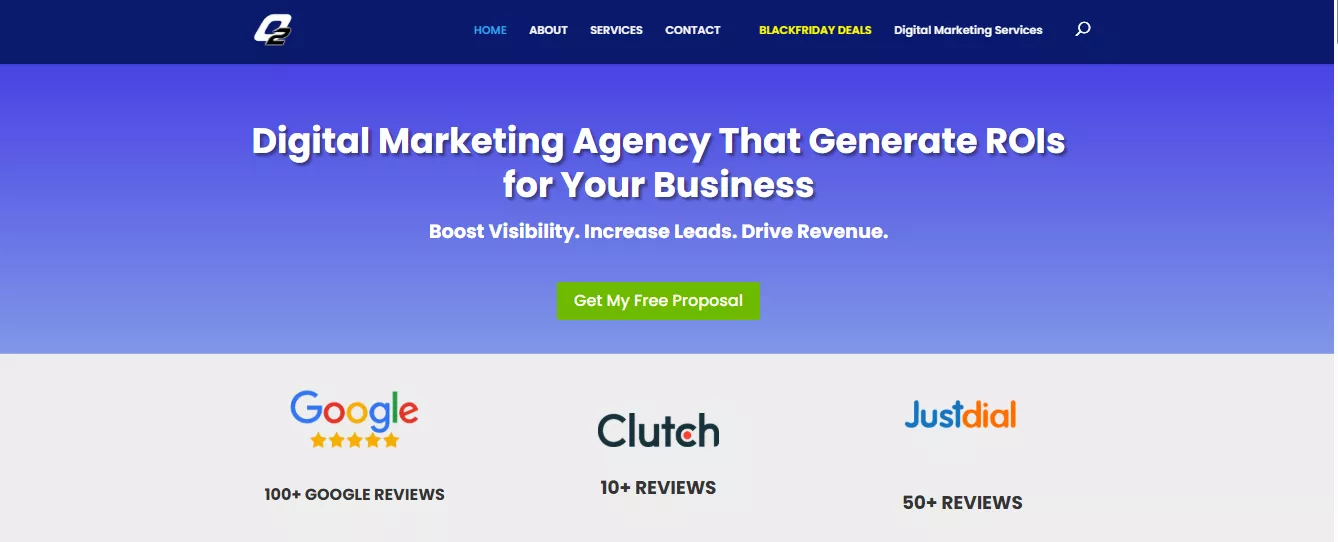
Oxygenites is a leading web design and digital marketing company with over 13 years of experience.
Oxygenites provides a full range of services, including website design and development, search engine optimization (SEO), social media marketing, pay-per-click (PPC) advertising, content writing, video production, reputation management, conversion management, and Amazon marketing.
Their holistic approach ensures every website is visually strong and optimized for traffic, engagement, and lead generation.
Oxygenites stands out for its focus on delivering measurable business outcomes. By combining creative design, technical expertise, and data-driven digital marketing strategies, the company helps brands strengthen their online presence and achieve consistent growth.
This commitment to quality and performance has made Oxygenites a trusted name among top web design companies in Hyderabad
Contact details
Phone: 9885346295
Email: info@oxygenites.com
Website: https://oxygenites.com/
Probey Services
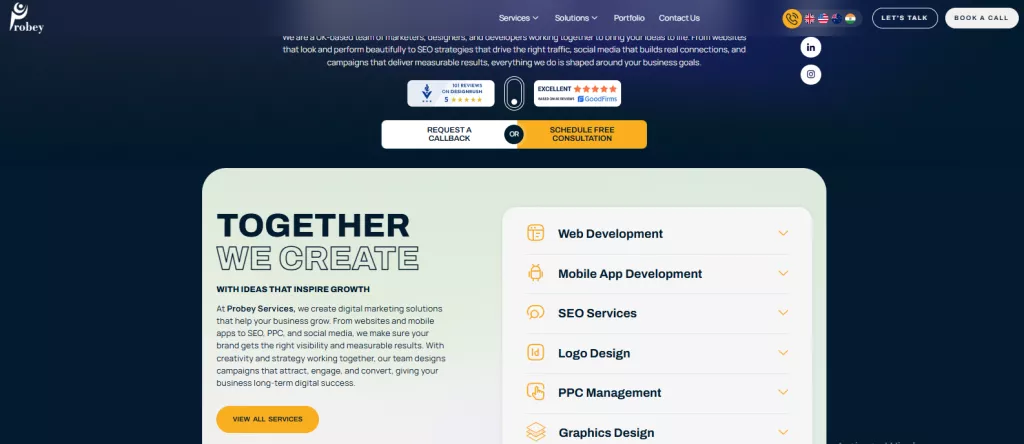
ProbeyServices is a digital solutions provider offering a wide range of development and marketing services designed to help businesses grow online.
The company specializes in website development, including business websites, web applications, and fully customized web solutions tailored to different industries.
In addition, they provide mobile app development services for iOS, Android, and Flutter platforms, ensuring scalable and user-friendly applications.
Their expertise also extends to e-commerce development using platforms like Shopify, Magento, and Joomla, enabling businesses to build and manage online stores effectively.
Along with development, Probey Services supports content management systems such as WordPress and Wix, making it easier for businesses to create, manage, and optimize their digital presence.
Contact Details
Phone: 97739 01990
Email: info@probeyservices.com
website: https://probeyservices.com/
DigitalZap
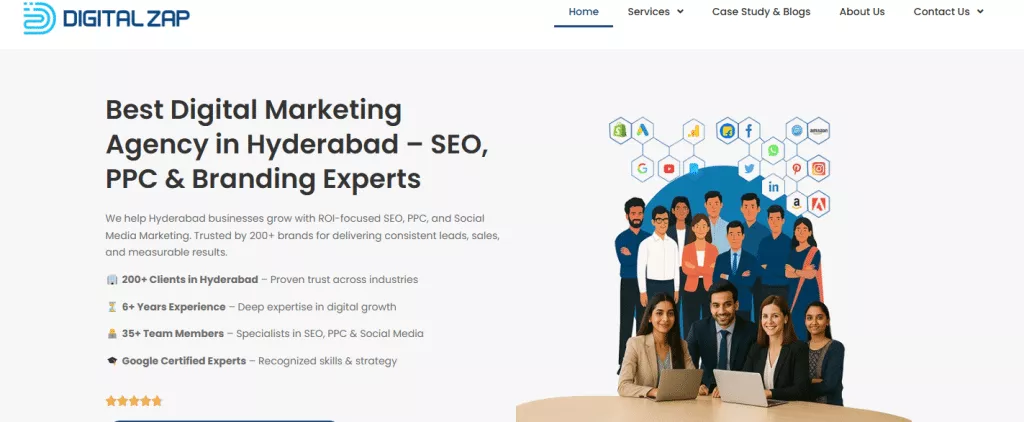
DigitalZap is a leading company in Hyderabad offering professional web design services to help businesses build strong and visually appealing online platforms.
The company provides website designing and development services focused on creating user-friendly, responsive, and business-oriented websites that enhance brand presence.
Along with web designing, DigitalZap also offers search engine marketing, marketplace marketing, app marketing, and branding services in Hyderabad, helping businesses strengthen their identity and reach their target audience effectively.
Their integrated approach ensures businesses have a well-designed website supported by strategic marketing and branding solutions for overall digital growth.
Contact details
Phone: 7331122663
Email: contact@digitalzap.in
Website: https://digitalzap.in/
Nexonweb
Nexonweb
Nexonweb is a technology-driven company that delivers a broad range of digital and development solutions to support modern business needs.
The company provides web and mobile app development and offshore development to help organizations build scalable and reliable digital platforms.
Its expertise also includes AI and ML development, IoT development, and blockchain development, enabling businesses to adopt advanced technologies.
Nexonweb also offers e-commerce solutions and mobile app development to create seamless digital experiences across devices. The company provides digital marketing services to support online visibility and business growth through strategic digital initiatives.
Contact details
Phone: +91-9063 630795
Email: sales@nexonweb.com
Website: https://nexonweb.com/
Conclusion
Hyderabad has become a leading destination for web designing and digital marketing services, offering businesses access to skilled professionals, innovative technology, and cost-effective solutions.
From website design and development to SEO, social media marketing, PPC, content creation, and conversion optimization, web design companies in Hyderabad provide end-to-end services that help brands build a strong online presence.
Whether you are a startup launching your first website or an established business aiming to enhance digital performance, choosing the right web design company in Hyderabad can drive long-term growth and measurable results.
With their focus on user experience, search visibility, and data-driven strategies, these agencies play a vital role in helping businesses stay competitive in today’s digital landscape.
FAQS
1. What services do web design companies in Hyderabad offer?
Most web design companies in Hyderabad offer website design and development, search engine optimization (SEO), social media marketing, pay-per-click (PPC) advertising, content writing, video production, reputation management, conversion optimization, and Amazon marketing services.
2. Do web design companies in Hyderabad also provide digital marketing
services?
Yes, many web design companies in Hyderabad provide complete digital marketing services, including SEO, social media marketing, PPC campaigns, content marketing, and online reputation management to help businesses grow online.
3. How long does it take to design and develop a website?
The timeline depends on the scope of the project. A basic website may take 2–4 weeks, while advanced or eCommerce websites can take 6–8 weeks or longer, depending on design and development requirements.
4. Do web design companies help with conversion optimization?
Yes, conversion management is a key service offered by many agencies. This includes improving website layout, call-to-action placement, page speed, and user journey to increase leads and sales.
5. How do I choose the best web design company in Hyderabad?
To choose the best company, review their portfolio, services offered, client testimonials, industry experience, pricing transparency, and ability to provide end-to-end digital marketing solutions.
by Shashikanth Heerekar | Jan 31, 2026 | Digital Marketing
Introduction
A website is essential for growth and visibility. A well-designed site allows businesses to share information and connect with people searching online.
As customers increasingly rely on the internet for services and updates, businesses must adapt to remain competitive and sustainable.
With most people searching online for services, even small businesses must keep up with digital trends. A website increases a dental clinic’s visibility and attracts more patients.
This guide explains how to create a website. We also offer website services for dental clinics ready to get started.
Who Is Your Target Audience for a Dental Clinic Website?
Before building your website, identify your audience. Understanding your patients makes it easier to design a site that meets their needs.
Most dental clinic visitors include:
- Families looking for regular dental checkups
- Young adults interested in cosmetic treatments
- Elderly patients needing long-term dental care
- People searching for emergency dental services
Your website should address common patient questions, such as treatment options, clinic hours, dentist experience, and location. Clear communication helps patients feel comfortable and increases appointment bookings.
For example, your website can highlight teeth whitening and braces for young adults, regular checkups for families, dentures for elderly patients, and a clear emergency contact option for urgent care.
Essential Features of a Successful Dental Clinic Website
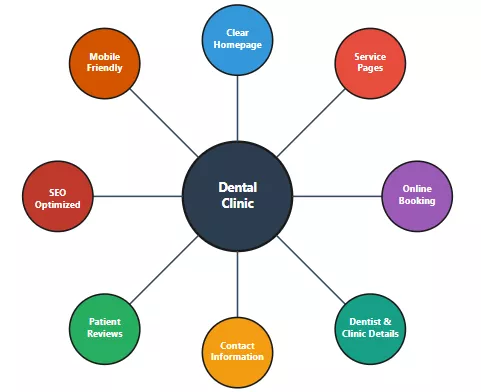
Your website should be simple, clean, and functional. It should include the following features:
1. Clear Homepage
Your homepage should clearly state who you are, what you offer, and how patients can book an appointment.
For example, we can design it so that it features your clinic logo, “General & Cosmetic Dentistry,” and a bold “Book an Appointment” button.
2. Service Pages
Each service should have its own page. This helps patients understand your treatments and improves SEO by allowing Google to index each page.
For instance, separate pages for dental implants, root canal treatment, braces, and teeth whitening will make it easier for your patients to find the information they need.
3. Online Appointment Booking
Make it easy for patients to book appointments online. Online booking saves time for both patients and staff.
For example, we can create a form where patients select the date, time, and service they need.
4. Dentist and Clinic Details
Patients are more likely to trust clinics that display real information. Include dentist profiles, qualifications, experience, and actual clinic photos.
For instance, showing photos of your dentists and the clinic itself reassures patients before their visit.
5. Contact Information
Make it easy for patients to contact you by including your phone number, email, address, and a Google Map.
For example, placing the phone number in the header and the map in the footer ensures patients can reach you quickly.
6. Patient Reviews
Positive reviews build trust. Add genuine testimonials from satisfied patients.
For instance, reviews like “Friendly staff and painless treatment” or “Highly professional dentists” encourage new visitors to book appointments.
Best Practices for User Experience and Interface Design
An easy-to-use website keeps visitors engaged and encourages bookings.
1. Mobile-Friendly Design
Your website should function seamlessly on phones and tablets, allowing patients to call or book appointments from any device.
For example, a responsive website automatically resizes images and menus for all screen sizes.
2. Fast Loading Speed
A slow website drives patients away. Ensure your site loads quickly to create a positive impression.
For instance, compressing images and simplifying the layout helps the site load in under 3 seconds.
3. Easy Navigation
Make it simple for patients to find the information they need.
For example, a top menu with links like Home, Services, About Us, Contact ensures smooth navigation.
4. Simple Language
Use clear, straightforward language that your patients can easily understand.
For instance, instead of saying “oral prophylaxis,” we say “professional teeth cleaning.”
SEO Strategies to Enhance Your Dental Clinic Website
SEO ensures your website appears in Google search results when patients look for dental services.
1. Local SEO
List your clinic on Google Business Profile with accurate address and contact details. Encourage satisfied patients to leave reviews, as these improve local rankings. Use location-based keywords on service pages to help search engines identify your clinic’s service area.
For example, phrases like “best dental clinic in Hyderabad” or “Hyderabad dentist for teeth whitening” target local searches.
2. Optimized Titles and Descriptions
Titles should be concise, clear, and include the main service keyword. Meta descriptions should explain the page simply and encourage users to click. Well-written titles and descriptions can increase click-through rates from Google.
For instance, a service page titled “Dental Implants in Hyderabad at ABC Dental Clinic” improves your visibility in search results.
3. Quality Content
High-quality content builds trust and establishes your clinic as an expert. Regular blog updates keep your website fresh and relevant. Educational content encourages visitors to stay longer, supporting better SEO performance.
For example, a blog like “When do you need a root canal?” educates visitors and improves Google ranking.
4. Internal Linking
Internal links help search engines find important pages and distribute page authority across your site. Clear internal linking also improves user experience by making information easy to find.
For instance, linking the root canal blog to your root canal service page improves navigation and search visibility.
5. Secure Website
A secure website protects patient data and builds trust. Google ranks HTTPS websites higher than unsecured sites. Security also reduces the risk of cyber threats and technical issues.
For example, your website URL starts with https:// and shows a secure padlock in browsers.
Choosing the Best Ads Platform for Your Dental Clinic
For paid campaigns, deciding between Google Ads and Meta Ads depends on your clinic’s goals. Google Ads helps patients find your clinic when searching for services, while Meta Ads (Facebook & Instagram) build awareness and engagement.
Using your Google Business Profile (GMB) for dental clinics alongside these platforms enhances local reach, making it easier for patients to discover and contact your clinic.
Conclusion:
A website is a powerful tool for any dental clinic. It helps you stay visible, build trust, and connect with patients searching online. With simple design, helpful content, and good SEO, your website works for you around the clock.
If you’re thinking about creating a website for your dental clinic, now is a great time to start. We help dental clinics build professional, easy-to-use, and search-friendly websites that support long-term growth.
A strong website is more than just good design. It gives your patients a better experience and helps your clinic grow.
FAQ’s
1. Why is a clear homepage important for a dental clinic website?
A clear homepage helps patients quickly see who you are, what services you offer, and how to book appointments. This builds trust and encourages engagement.
2. Do I need separate pages for each dental service?
Yes. Having separate pages for each service helps patients understand your offerings and makes it easier for Google to index your site, which boosts SEO and search visibility.
3. How can online appointment booking improve my clinic’s efficiency?
It allows patients to schedule appointments without calling, saves staff time, reduces scheduling errors, and improves patient experience.
4. Why is mobile-friendly design essential for dental websites?
MosMost people search for services on their phones. A mobile-friendly website makes it easy for patients to book appointments or call from any device.
5. What SEO strategies should I implement for my dental clinic website?
Focus on local SEO by including your city and area, use clear page titles and descriptions, create quality content that answers patient questions, add internal links, and make sure your website is secure with HTTPS.
by Shashikanth Heerekar | Jan 31, 2026 | Digital Marketing
Introduction
If you run or market a dental clinic, you already know social media matters. But posting randomly does not work anymore. That is why we use a social media calendar for dental clinics. A calendar helps us plan content in advance, stay consistent, and talk to patients at the right time.
When we schedule posts properly, we save time, reduce stress, and improve engagement. Instead of asking “What should I post today?”, you already have a clear plan. For example, many successful dental clinics use a monthly social media calendar to attract new patients and build trust with existing ones.
In this guide, I explain how to schedule a social media calendar for dental clinics step by step, using simple words and practical tips that actually work.
Assessing Your Target Audience Identifying Key Demographics for Effective Engagement
Before planning content, it is important to understand your target audience. Dental clinics do not serve a single type of patient. They provide services to families, working professionals, senior citizens, and children, each with different dental needs and expectations. Identifying these groups helps dental clinics create relevant and engaging content.
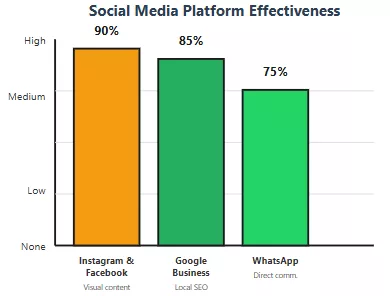
This graph explains that Instagram & Facebook are the most effective platforms (90%) for promotion and visibility, followed by Google Business (85%) for local search, and WhatsApp (75%) for direct communication.
Who Are Your Dental Patients?
Most dental clinic audiences include:
- Parents looking for family dental care
- Young adults interested in teeth cleaning or whitening
- Working professionals who want quick appointments
- Older patients who need long-term dental solutions
For instance, if most of your patients are working professionals, they are active on social media in the evening. That means we schedule posts after office hours.
Choosing the Right Social Media Platforms Not every platform works the same way.
- Instagram & Facebook work well for local dental clinics
- Google my business (gmb)posts help with local SEO
- WhatsApp broadcasts help with reminders and offers
When you know your audience and platform, scheduling becomes much easier.
Creating Content Categories: Types of Posts
A strong social media calendar for dental clinics includes different types of content. Posting the same thing every day does not work because your followers will get bored, and engagement will drop. Mixing content types keeps your page interesting and helps you reach different patient needs. Using platforms like GMB for dental clinics alongside social media posts can further improve visibility and attract local patients.
1. Educational Dental Content
Educational posts build trust.
- Dental hygiene tips
- Brushing and flossing advice
- FAQ posts about treatments
For example, a simple post like “Why regular dental checkups matter” helps patients feel confident.
2. Promotional and Offer-Based Posts
These posts bring appointments.
- Teeth cleaning offers
- Whitening discounts
- Free consultation posts
For instance, clinics that post monthly offers often see more booking inquiries.
3. Trust-Building Content
Trust is very important in dental marketing.
- Patient testimonials
- Before-and-after images
- Dentist introductions
They show real results and real people.
4. Engagement and Community Posts
These posts increase interaction.
- Polls
- Q&A stories
- Festival or awareness day posts
For example, a “Smile Day” post with a question gets good engagement.
Building Your Social Media Calendar: Tools and Techniques for Effective Scheduling
Now let’s talk about how to schedule a social media calendar for dental clinics.
1. Choosing the Right Scheduling Tools
You do not need expensive software to manage social media for dental clinics. Many affordable and free tools are enough to stay consistent and organized. Popular scheduling tools include Meta Business Suite (free), Buffer, Hootsuite, and Later.
Meta Business Suite (free)
These tools help you schedule posts in advance and stay consistent.
2. Planning Weekly or Monthly Calendars
Planning content in advance is key to successful social media marketing for dental clinics. It is best to plan a monthly social media calendar, which gives you a clear overview of upcoming posts and campaigns.
- 3–4 posts per week
- Mix education, offers, and engagement
- Keep captions short and friendly
For example, Monday can be education, Wednesday engagement, Friday promotion.
3. Writing Simple Captions That Convert
Effective captions do not need to be long or complicated. Use simple words and a friendly tone that sounds natural and approachable. Write captions as if you are talking to a patient face to face. Always end with a clear call to action, such as booking an appointment or contacting the clinic.
Use easy words.
Talk like a friend.
End with a clear action.
For instance:
“Healthy teeth start with small habits. Book your dental checkup today.”
Best Practices for Maintaining Engagement: Tips for Posting Frequency and Interaction
Scheduling is not enough. We must also engage.
1. Posting Frequency That Works for Dental Clinics
Posting regularly helps dental clinics stay visible without overwhelming their audience. Most dental clinics perform well when they share 3 to 5 posts per week because this keeps the clinic active in followers’ feeds. Posting daily stories is also important because stories feel personal and help clinics stay connected with patients throughout the day.
- 3 to 5 posts per week
- Daily stories
- Weekly reels
Posting too much can reduce reach.
2. Responding to Comments and Messages
Social media is not only about posting content; it is also about conversation. When people comment or send messages, replying quickly makes them feel heard and respected. This builds trust, especially for dental clinics where patients need confidence before booking an appointment.
When people comment or message, reply fast.
They feel valued.
This builds trust and increases appointment chances.
For example, clinics that reply within one hour often get more conversions. Additionally, sharing posts that link to guides or tips on how to make website for dental clinics can educate patients and make your clinic look professional and trustworthy.
Conclusion
Now you know how to schedule a social media calendar for dental clinics in a simple and effective way. A calendar helps you stay consistent, save time, and connect with patients naturally.
When we understand our audience, plan the right content, use scheduling tools, and track results, social media becomes a powerful growth tool. Start small, stay consistent, and improve every month.
If you treat social media like a long-term strategy, not a one-time task, your dental clinic will build trust, attract patients, and grow steadily.
FAQ’s
1. Why do dental clinics need a social media calendar?
A social media calendar helps dental clinics plan posts in advance and stay consistent. It saves time, reduces daily stress, and helps clinics post the right content at the right time to attract and engage patients. It also ensures that important updates, offers, and awareness posts are never missed.
2. How often should a dental clinic post on social media?
Most dental clinics perform well by posting 3 to 5 times per week, sharing daily stories, and posting weekly reels. This keeps the clinic visible without overwhelming followers. Consistent posting also helps improve reach and engagement over time.
3. What type of content works best for dental clinics on social media?
Educational posts, promotional offers, patient testimonials, and engagement posts work best. Mixing these content types helps build trust, attract new patients, and increase interaction. A balanced content mix keeps followers interested and active.
4. Which social media platforms are best for dental clinics?
Instagram and Facebook work well for local dental clinics. Google Business Profile posts help with local SEO, and WhatsApp is useful for reminders and special offers. Choosing the right platforms helps clinics reach patients more effectively.
5. How does responding to comments and messages help dental clinics?
Quick replies make patients feel valued and build trust. Dental clinics that respond within one hour often see higher appointment bookings and better patient engagement. Fast responses also show professionalism and improve the clinic’s reputation online.