by Shashikanth Heerekar | Aug 16, 2025 | Artificial intelligence
ChatGPT-5 vs ChatGPT-4: Discover key differences in speed, accuracy, multimodal features, and usability to see if upgrading is worth it.
Introduction
The release of OpenAI’s ChatGPT-5 has sparked excitement, but how does it truly compare to ChatGPT-4? In this ChatGPT-5 vs 4 analysis, I look at performance, accuracy, and usability to help you decide if upgrading is worthwhile.
When I compare
GPT-5 vs GPT-4, speed and efficiency stand out immediately. ChatGPT-5 replies more quickly, seems more seamless, and can easily tackle complicated questions. It also shows stronger reasoning and fewer mistakes. Whether you’re a developer, researcher, or casual user, the improvements in accuracy and memory make GPT-5 a major leap forward.
Key Improvements in ChatGPT-5 Over ChatGPT-4
Performance and Speed Comparison
Speed is one of the main distinctions between GPT-5 and GPT-4. In my testing and from early reports, ChatGPT-5 replies up to 30% faster than GPT-4. This makes real-time interactions like live translations or coding, and
AI chatbot roleplays much more fluid.
The speed boost doesn’t reduce quality. In fact, GPT-5 holds context better in long conversations, where GPT-4 might lose track. Developers also benefit from lower latency and more efficient resource use. Businesses building chatbots, support tools, or analytics apps will notice the smoother performance right away.
Accuracy and Reduced Hallucinations
Accuracy is where GPT-5 truly shines. Compared to GPT-4, the newer model produces fewer factual mistakes and “hallucinations.” It’s also more honest about what it doesn’t know, instead of making up answers.
In real-world use, this means GPT-5 is far more reliable for technical, medical, and scientific queries. Standardized testing confirms it: GPT-5 scores consistently higher across most domains, especially in programming, legal analysis, and research. For anyone who values correctness, upgrading is an easy choice.
Multimodal Capabilities Enhancement
GPT-4 introduced basic multimodal features, but GPT-5 takes them further. It’s better at analyzing images, interpreting documents, and even handling OCR and object recognition.
This makes GPT-5 more versatile for tasks like data analysis, content moderation, or accessibility tools. While audio and video support may come in future versions, GPT-5 already sets a new standard in connecting text with visual inputs.
Benchmark Comparisons Between GPT-5 and GPT-4
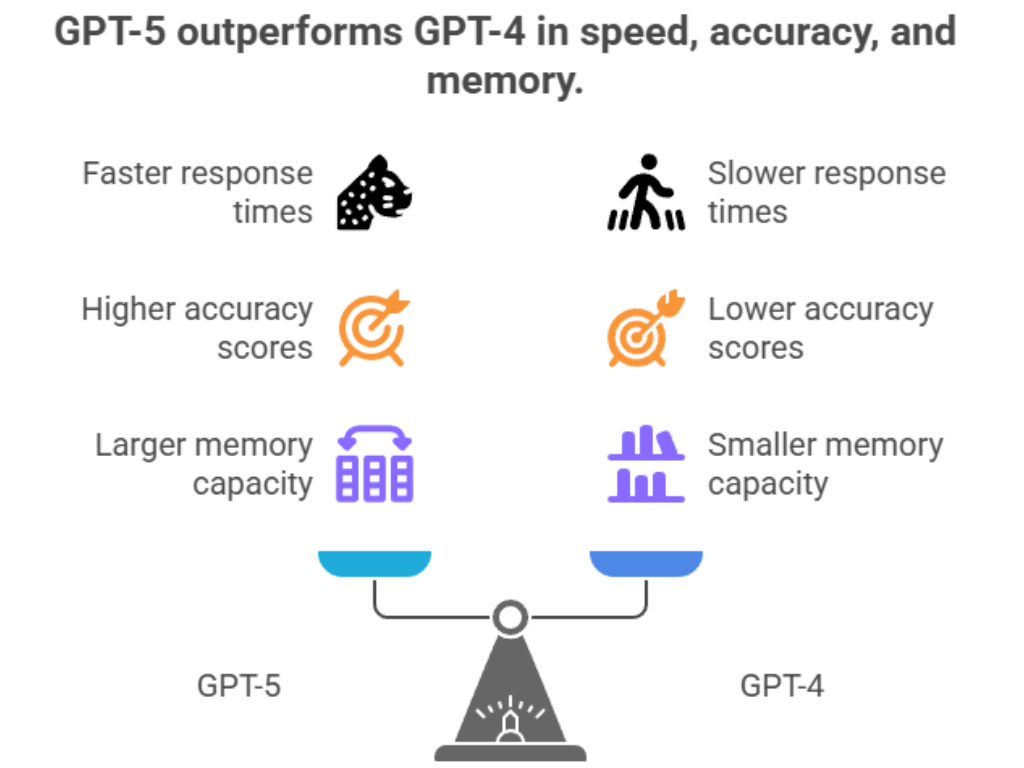
Independent tests show GPT-5’s edge clearly. Speed tests reveal up to 25–30% faster response times, especially on complex, multi-step queries.
Accuracy benchmarks show GPT-5 scoring 15–20% higher than GPT-4. This matters most in fields where precision is critical, like medicine or law.
Memory is another game-changer. GPT-4 handled around 32K tokens, while GPT-5 is reported to support up to 128K. This means it can process far longer conversations or documents without losing context.
Practical Implications of Upgrading to ChatGPT-5
Business and Enterprise Applications
For organizations, upgrading is mostly about productivity and cost savings. ChatGPT-5’s speed and accuracy reduce errors, making it ideal for customer service, research, or content creation. In industries like law or medicine, its ability to parse long documents accurately is especially valuable.
Integration is smoother too, thanks to API optimizations. Companies using GPT-4 will likely find the switch easy, with immediate performance gains.
Developer and Technical Advantages
Developers notice several upgrades: better formatting, fewer edge case errors, and improved documentation. GPT-5 also uses resources more efficiently, lowering operational costs at scale.
Its improved understanding of code makes it more reliable for debugging, generating documentation, and teaching programming concepts. Combined with its larger context window, it opens doors to advanced applications like analyzing huge codebases or maintaining long-term conversations.
Everyday User Experience Differences
For casual users, the first thing you notice with GPT-5 is its conversational tone. It feels more natural, nuanced, and emotionally aware. Conversations flow more smoothly, making it great for brainstorming, learning, or extended discussions.
While GPT-4 still works well for simple tasks, GPT-5 is much stronger when conversations get complex or require following threads over time.
Of course, access and pricing will affect adoption. GPT-5 is likely to appear first in premium services, meaning some users may stick with GPT-4 until costs level out.
Challenges and Ethical Considerations
Energy Consumption and Environmental Impact
With more power comes more energy use. GPT-5’s advanced capabilities demand greater computational resources, which could worsen AI’s environmental footprint. OpenAI has mentioned working on optimizations, but the trade-off remains.
Organizations scaling GPT-5 should consider sustainability impacts, balancing performance gains against energy costs.
Bias and Fairness in Responses
GPT-5 reduces harmful bias compared to GPT-4, but it’s not perfect. It handles sensitive topics with more nuance, though it sometimes over-censors by avoiding certain issues entirely.
For global audiences, users must still check how well GPT-5 adapts to cultural differences. While improved, occasional bias or misinterpretation persists.
Accessibility and Digital Divide Concerns
GPT-5 risks deepening the digital divide if it stays locked behind premium services. Educational institutions, nonprofits, and users in developing regions may struggle to access it.
Since AI can transform education and productivity, equitable access is vital. Open-source or subsidized models could help close this gap.
Future of AI: What Comes After GPT-5?
The Path Toward Artificial General Intelligence
GPT-5 is a step closer to AGI, but not there yet. It shows progress in reasoning, context, and flexibility, but true comprehension and independent learning remain future goals.
Upcoming models may feature dynamic memory and real-time learning. These would blur the line between today’s narrow AI and more general intelligence.
Emerging Competitors and Alternatives
OpenAI isn’t alone. Google’s Gemini, Anthropic’s Claude, and various open-source projects are pushing competition. Some tools may specialize in law, medicine, or creative arts, fragmenting the AI market into specialized solutions rather than one-size-fits-all systems.
Although GPT-5 is now ahead of benchmarks, the race is far from finished.
Potential Applications on the Horizon
Looking ahead, GPT-5 hints at exciting possibilities. More advanced multimodal systems could combine text, images, audio, and video seamlessly, reshaping industries like education, media, and accessibility.
Its improved memory suggests future AIs may act as persistent digital assistants, keeping long-term context across multiple interactions. This could transform AI into more of a collaborative partner than just a tool.
Final Verdict: Is Upgrading to ChatGPT-5 Worth It?
For professionals and businesses, GPT-5 is a clear upgrade. Its faster speed, higher accuracy, and stronger reasoning mean fewer errors, smoother workflows, and better output.
For everyday users, GPT-4 may still be “good enough” for simple tasks. But if you regularly use AI for learning, research, or creative projects, GPT-5 feels more natural and capable.
Ultimately, the choice depends on your needs and budget. As GPT-5 becomes more widely available, its advantages will be hard to ignore. Early adopters are likely to gain the most.
FAQs
1. What is ChatGPT-5’s primary distinction from ChatGPT-4?
ChatGPT-5 is faster, more accurate, and handles longer conversations with improved memory compared to ChatGPT-4.
2. Is ChatGPT-5 worth upgrading from ChatGPT-4?
Yes, especially for businesses and professionals. Its speed, accuracy, and better context handling offer clear productivity gains.
3. How much faster is ChatGPT-5 compared to GPT-4?
Early reports show GPT-5 responds up to 25–30% faster, making real-time interactions smoother and more natural than GPT-4.
4. Does ChatGPT-5 reduce hallucinations?
Yes. GPT-5 provides more reliable answers and admits when it doesn’t know, unlike GPT-4, which sometimes generated false information.
5. What new features does ChatGPT-5 offer over GPT-4?
ChatGPT-5 improves multimodal capabilities, supports longer context windows (up to 128K tokens), and delivers more natural conversations.
by Shashikanth Heerekar | Aug 8, 2025 | Artificial intelligence
Explore the key differences between ChatGPT-4 and ChatGPT-5, including speed, accuracy & reasoning. See how GPT-5 outperforms GPT-4 in AI capabilities.
Introduction to the Evolution of AI Chatbots
The world of artificial intelligence has witnessed remarkable progress in recent years, with OpenAI’s ChatGPT models leading the charge. When ChatGPT-4 was released, it set new standards for what conversational AI could achieve, demonstrating impressive capabilities in natural language understanding, creative tasks, and technical problem-solving. Now, with the arrival of ChatGPT-5, we’re seeing another quantum leap in AI technology that pushes the boundaries even further.
In this in-depth comparison between ChatGPT-4 and ChatGPT-5, we’ll explore every aspect of these two powerful AI models. From their fundamental architectures to their real-world performance across various tasks, this analysis will help you understand exactly how ChatGPT-5 improves upon its predecessor and whether upgrading makes sense for your specific needs. The differences go beyond simple metrics – we’re looking at how these models think, reason, and interact with users in fundamentally different ways.
First Impressions: Experiencing Both Generations
My Initial Experience with ChatGPT-4
When I first gained access to ChatGPT-4, it felt like stepping into the future of human-computer interaction. The model demonstrated an uncanny ability to understand context, maintain coherent conversations across multiple turns, and generate surprisingly creative content. I remember testing it with complex programming questions and being amazed at how it could not only explain concepts but actually write functional code snippets. The multilingual capabilities were particularly impressive, allowing for relatively seamless conversations across different languages.
However, even in those early days of excitement, certain limitations became apparent. The model would occasionally provide confidently stated but incorrect information, a phenomenon known as “hallucination.” More complex reasoning tasks sometimes required careful prompt engineering to get optimal results. There were noticeable delays in response times during peak usage periods, and the model could struggle with maintaining context in very long conversations.
The Moment I First Used ChatGPT-5
The transition to ChatGPT-5 was immediately noticeable from the very first interaction. The response time felt significantly faster, even when handling complex queries. But more importantly, the quality of responses had taken a qualitative leap forward. Where ChatGPT-4 sometimes felt like a very advanced chatbot, ChatGPT-5’s responses carried more nuance and depth, often anticipating follow-up questions before I even asked them.
One of my first tests was asking both models to explain a complex scientific concept at different levels of understanding – from elementary school to graduate-level comprehension. While ChatGPT-4 performed admirably at this task, ChatGPT-5 demonstrated superior ability to truly tailor explanations to the specified knowledge level without oversimplifying or using inappropriate jargon. This suggested significant improvements in the model’s understanding of user intent and contextual adaptation.
Understanding ChatGPT-4’s Capabilities and Constraints
Where ChatGPT-4 Excelled
ChatGPT-4 represented a major advancement in AI language models when it was released. Its ability to understand and generate human-like text across a wide range of topics made it invaluable for numerous applications. The model showed particular strength in creative writing tasks, capable of generating coherent stories, poems, and even screenplays with consistent tone and character development. For technical users, its coding assistance capabilities were revolutionary, able to explain programming concepts, debug code, and even suggest optimizations.
The multilingual support in ChatGPT-4 was another area where it shone brightly. While not perfectly fluent in all languages, its ability to maintain context and provide reasonably accurate translations between languages opened up new possibilities for global communication. Business users found it particularly useful for drafting emails, creating reports, and analyzing data – tasks where its ability to understand context and follow instructions proved invaluable.
The Limitations That Became Apparent
Despite its impressive capabilities, extended use of ChatGPT-4 revealed several consistent limitations. The model’s knowledge cutoff meant it couldn’t provide information about events or developments after its training period. More concerning was its tendency to occasionally generate plausible-sounding but factually incorrect responses, especially when dealing with niche topics or less common knowledge areas.
Another significant limitation was its handling of complex, multi-step reasoning problems. While it could often solve individual components of a problem correctly, maintaining logical consistency across an extended chain of reasoning sometimes proved challenging. Users also reported that getting the best results often required careful prompt engineering – crafting questions in specific ways to elicit the desired response quality.
ChatGPT-5: The New Frontier in Conversational AI
Key Advancements and Innovations
ChatGPT-5 represents a substantial evolution in AI capabilities, building on the foundation of ChatGPT-4 while addressing many of its limitations. One of the most immediately noticeable improvements is in response quality and coherence. The model demonstrates significantly better understanding of nuanced queries and can handle complex instructions with greater accuracy. This is particularly evident in technical domains where precision is critical.
Perhaps the biggest gain has been in reasoning abilities. ChatGPT-5 can follow extended logical chains more reliably, make appropriate inferences, and even recognize when it needs to ask clarifying questions rather than make assumptions. This leads to more accurate and useful responses, especially in professional contexts where incorrect information could have serious consequences.
Personal Observations from Extensive Testing
Having used ChatGPT-5 extensively across various applications, several consistent improvements stand out. The model’s ability to maintain context in long conversations is markedly better, reducing the need for constant repetition or clarification. In creative tasks, it demonstrates more sophisticated understanding of narrative structure, character development, and stylistic consistency.
For technical applications like programming assistance, the improvements are particularly valuable. ChatGPT-5 not only provides more accurate code suggestions but can better explain the reasoning behind its solutions. When debugging, it’s more likely to identify root causes rather than just symptoms, and its suggestions for optimization tend to be more practical and implementation-ready.
Head-to-Head Comparison: ChatGPT-4 vs ChatGPT-5
Performance in Speed and Accuracy
When comparing response times, ChatGPT-5 consistently outperforms its predecessor, especially noticeable when handling complex queries that require substantial computation. More importantly, the quality of these faster responses is superior – ChatGPT-5 makes fewer factual errors and demonstrates better judgment in ambiguous situations. This combination of speed and accuracy makes for a significantly more productive user experience.
In practical testing across various domains, ChatGPT-5 maintains its advantage. Whether answering technical questions, providing creative suggestions, or analyzing complex information, it delivers more reliable results with less need for verification. This reliability boost is particularly valuable in professional settings where accuracy is paramount.
Reasoning and Problem-Solving Capabilities
Among ChatGPT-5’s most notable enhancements are the increases in reasoning abilities. Where ChatGPT-4 might struggle with multi-faceted problems requiring several steps of analysis, ChatGPT-5 demonstrates more methodical and reliable problem-solving approaches. This is evident in everything from mathematical proofs to business strategy development.
A particularly impressive aspect is ChatGPT-5’s improved ability to recognize its own limitations. It’s more likely to acknowledge when it doesn’t have enough information to provide a definitive answer, rather than generating a potentially incorrect response. This metacognitive ability represents an important step forward in AI safety and reliability.
Conversational Flow and Adaptability
The natural flow of conversation with ChatGPT-5 feels noticeably more human-like. The model excels at maintaining appropriate context throughout extended dialogues, picking up on subtle cues, and adapting its responses accordingly. This makes for more productive and enjoyable interactions, especially in complex discussions that span multiple topics.
ChatGPT-5 also demonstrates superior ability to adjust its communication style based on implicit cues. Where ChatGPT-4 often required explicit instructions to adopt a particular tone or level of formality, ChatGPT-5 more naturally matches the user’s style, making the interaction feel more intuitive and less like talking to a machine.
Real-World Application: A Case Study in Coding Assistance
Practical Comparison in Development Work
To truly understand the differences between these models, I conducted an extensive comparison using real-world programming tasks. The test involved debugging a complex Python script with multiple interacting components, optimizing an algorithm, and then explaining the changes to a non-technical stakeholder.
ChatGPT-4 performed competently at these tasks, successfully identifying several bugs and suggesting reasonable optimizations. However, it occasionally missed subtle interactions between different parts of the code and sometimes proposed solutions that, while technically correct, weren’t the most efficient or maintainable approaches. Its explanations for non-technical audiences were good but sometimes included unnecessary technical details.
How ChatGPT-5 Handled the Same Challenges
ChatGPT-5’s performance on the same set of tasks demonstrated clear advancements. It not only identified all the bugs that ChatGPT-4 found but also caught several more subtle issues related to edge cases and error handling. The optimization suggestions were more thoughtful, considering not just raw performance but also code readability and long-term maintainability.
Perhaps most impressive was ChatGPT-5’s ability to tailor its explanations perfectly to the audience. For non-technical explanations, it used excellent analogies and avoided jargon without oversimplifying the core concepts. When asked to provide more technical details for developer documentation, it adjusted seamlessly to include appropriate specifics.
Making the Decision: Should You Upgrade to ChatGPT-5?
Considerations for Casual Users
For those using AI primarily for general knowledge questions, casual conversation, or simple content generation, ChatGPT-4 may still meet most needs adequately. The improvements in ChatGPT-5, while noticeable, might not justify any additional cost or access requirements for these basic use cases. However, the enhanced conversational flow and reliability could still provide a better overall experience even for casual interactions.
Benefits for Professionals and Power Users
For professionals using AI in their work – whether in writing, programming, research, or analysis – the advantages of ChatGPT-5 are substantial enough to strongly consider upgrading. The improved accuracy alone can save significant time in fact-checking and verification. The enhanced reasoning capabilities open up new possibilities for complex problem-solving and decision support.
Developers in particular will appreciate the more reliable coding assistance, while content creators can benefit from the more nuanced understanding of style and audience. Researchers working with complex information will find the improved ability to synthesize and analyze information from multiple sources invaluable.
Final Assessment: Evaluating the Generational Leap
Recognizing ChatGPT-4’s Legacy
It’s important to acknowledge that ChatGPT-4 was and remains a groundbreaking achievement in AI. Its capabilities transformed how many people work with information and automation, setting new expectations for what conversational AI could achieve. Many of its core strengths – the language fluency, creative potential, and technical utility – continue to make it a powerful tool even with ChatGPT-5 now available.
Why ChatGPT-5 Represents a Meaningful Advancement
What makes ChatGPT-5 special isn’t just incremental improvements in existing capabilities, but the emergence of new qualities in AI interaction. The enhanced reasoning, more reliable outputs, and superior contextual understanding create a fundamentally different user experience. It feels less like using a tool and more like collaborating with a knowledgeable partner.
The improvements in safety and reliability are particularly noteworthy. ChatGPT-5’s better judgment about when it knows something versus when it’s speculating, combined with its increased accuracy, makes it suitable for more serious applications where errors could have significant consequences.
Looking Ahead: The Future of AI Chatbots
The advancements in ChatGPT-5 offer a glimpse into AI’s future—with improved reasoning, reliability, and contextual understanding paving the way for more sophisticated collaboration and critical decision-making support. These innovations hint at transformative applications in education, research, and creative fields that we’ve yet to fully imagine. For users debating an upgrade, the choice depends on individual needs: while casual users may still find value in ChatGPT-4, professionals and power users will likely benefit immediately from ChatGPT-5’s enhanced capabilities. What remains undeniable is AI’s rapid evolution—chatbots are no longer novelties but indispensable tools reshaping how we work, create, and interact with technology.
FAQs: ChatGPT-4 vs ChatGPT-5
1. Is ChatGPT-5 much better than ChatGPT-4?
Yes, ChatGPT-5 is faster, more accurate, and handles complex reasoning better. The improvements are especially noticeable in technical tasks and long conversations.
2. What are the biggest upgrades in ChatGPT-5?
- Speed & response quality
- Fewer factual errors
- Better at coding & problem-solving
- More natural, human-like interactions
3. Does ChatGPT-5 still make mistakes?
While far fewer than ChatGPT-4, it’s not perfect. Always verify critical information, especially for research or coding.
4. Is ChatGPT-5 worth upgrading for coding?
Absolutely. It debugs more efficiently, explains code better, and suggests optimized solutions that ChatGPT-4 might miss.
5. Will ChatGPT-4 become obsolete?
Not immediately, but as ChatGPT-5 improves, GPT-4 may feel outdated for advanced tasks. Casual users can still use it, but professionals should consider upgrading.
by Shashikanth Heerekar | Aug 7, 2025 | All Things about Marketing, Digital Marketing
Discover the top digital marketing companies in Tamil Nadu offering expert SEO, social media, and web solutions to grow your business online.
Oxygen
A Trusted Digital Marketing Company in Hyderabad with 13 Years of ExcellenceThough based in Hyderabad, Oxygen has gained significant traction among businesses in Tamil Nadu for its highly targeted digital marketing solutions. With 13 years of consistent service and excellence, Oxygen has built a solid reputation for offering top-notch services like SEO, Google Ads, social media marketing, content marketing, and more.
Clients consistently praise Oxygen for its transparent communication, results-driven approach, and customized strategies that align with unique business goals.
Oxygen’s commitment to continuous improvement and client satisfaction truly sets it apart. Its seasoned team of digital marketing experts is known for delivering measurable ROI and adapting to the latest trends and technologies. Many businesses in Tamil Nadu prefer Oxygen for its ethical SEO practices, creative content campaigns, and unmatched support.
Location
Hyderabad (Serving clients across Tamil Nadu)
Digital Marketing Services Offered
- Search Engine Optimization
- Website Design and Development
- Social Media Marketing
- Video Production
- E-commerce Marketing
Key Highlights
- 13+ Years of Experience
- Transparent Communication
- Customized Marketing Strategies
- Creative & Data-Driven Campaigns
- Trusted by Businesses in Pune & Beyond
Contact Details
📞 Phone: 91 9885346295
📧 Email: info@oxygenites.com
🌐 Website: https://oxygenites.com/
Spinta Digital
Spinta Digital is a global digital marketing and branding agency that accelerates brands towards sustained growth. Since its inception in 2013, the company has been the catalyst for transformation, helping businesses reach new heights through its four foundational pillars: Branding, Creative Media, Marketing, and Technology.
With over a decade of experience, Spinta has mastered the art of crafting powerful and profitable brands. Their team works across the globe, with offices in the US, UK, and India, collaborating with clients to design high-impact strategies, immersive digital experiences, and innovative media solutions.
Their approach blends creativity with technology, ensuring every campaign is tailored to the brand’s unique identity and market needs. Having served over 450 clients worldwide, Spinta Digital’s commitment to measurable results and brand excellence makes them a trusted partner for businesses aiming to make a lasting impact.
Location: Vile Parle West, Mumbai (also in Chennai, Bangalore, Hyderabad, UK, and US)
Digital Marketing Services Offered
- Branding
- Creative Media
- Digital Marketing
- Technology Solutions
Key Highlights
- Over 450 clients served
- Offices across India, UK, and US
- Over a decade of expertise
- Customizable packages
- Global collaboration with local insights
Contact Details
Phone: +91 99528 03469
Email: hello@spintadigital.com
Website: www.spintadigital.com
by Shashikanth Heerekar | Aug 6, 2025 | Insights
Explore the best digital marketing companies in Mumbai offering expert SEO, social media, branding, and content services to grow your business online.
Oxygen
A Trusted Digital Marketing Company in Hyderabad with 13 Years of ExcellenceThough based in Hyderabad, Oxygen has gained significant traction among businesses in Mumbai for its highly targeted digital marketing solutions. With 13 years of consistent service and excellence, Oxygen has built a solid reputation for offering top-notch services like SEO, Google Ads, social media marketing, content marketing, and more.
Clients consistently praise Oxygen for its transparent communication, results-driven approach, and customized strategies that align with unique business goals.
Oxygen’s commitment to continuous improvement and client satisfaction truly sets it apart. Its seasoned team of digital marketing experts is known for delivering measurable ROI and adapting to the latest trends and technologies. Many businesses in Mumbai prefer Oxygen for its ethical SEO practices, creative content campaigns, and unmatched support.
Location
Hyderabad (Serving clients across Mumbai)
Digital Marketing Services Offered
Key Highlights
- 13+ Years of Experience
- Transparent Communication
- Customized Marketing Strategies
- Creative & Data-Driven Campaigns
- Trusted by Businesses in Pune & Beyond
Contact Details
📞 Phone: 91 9885346295
📧 Email: info@oxygenites.com
🌐 Website: https://oxygenites.com/
Madresult
Madresult is a results-driven digital marketing agency that blends creativity, strategy, and technology to deliver measurable business impact. Headquartered in Malad West, Mumbai, the agency has quickly earned a strong reputation as a trusted partner for brands seeking growth in the competitive digital space.
Founded in 2019 by Abhishek Karnik, Madresult has consistently raised the bar in digital marketing—helping brands redefine their presence and achieve unprecedented success. With a portfolio of over 200+ clients, the agency specializes in creating high-performing campaigns that not only drive engagement but also generate real revenue.
Backed by years of expertise, Madresult has delivered remarkable achievements:
- 200 Million+ Ad Impressions — creating an impactful digital footprint.
- 3000+ Successful Ad Campaigns — crafted with precision and creativity.
- 20 Million+ Leads, Purchases & App Installs — fueling client growth at scale.
- 150 Crore+ in Collective Revenue — generated for clients across industries.
Their services span across Performance Marketing, Search Engine Optimization, Digital Marketing, Social Media Marketing, Website Development, and Logo Branding. With a strong focus on SEO, Social Media Marketing, and Logo Branding, Madresult ensures that every campaign aligns with brand objectives while maximizing ROI.
By offering customizable packages, the agency tailors its strategies to fit unique business goals—whether it’s building awareness, scaling lead generation, or boosting conversions.
Location
Malad West, Mumbai, India
Services Offered
- Performance Marketing
- SEO (Search Engine Optimization)
- Digital Marketing
- Social Media Marketing
- Website Development
- Logo Branding
Key Highlights
- Established in 2019
- 200+ clients served
- 200 Million+ ad impressions
- 3000+ ad campaigns
- 20 Million+ leads, purchases & app installs
- 150 Crore+ collective revenue generated for clients
- Specializes in SEO, Social Media Marketing & Logo Branding
- Offers customizable digital marketing packages
Contact Details
📞 Phone: +91 7039515291
📧 Email: connect@madresult.com
🌐 Website: www.madresult.com
Bloom Agency

Bloom Agency is a globally recognized digital marketing agency in Mumbai, celebrated for its expertise in SEO, website development, and full-stack digital strategies. The agency is committed to helping businesses strengthen their online presence, generate targeted traffic, and achieve measurable growth.
With a customer-focused approach, Bloom Agency provides personalized digital solutions that align with unique business goals while ensuring long-term success. From building robust websites to executing powerful SEO campaigns, the agency empowers brands to expand their digital footprint and stay ahead in a competitive marketplace.
Having successfully partnered with 100+ clients, Bloom Agency has established itself as a trusted name in the industry. Their website development services stand out for being visually stunning, user-friendly, and optimized for performance.
Location
Chakala, Andheri (East), Mumbai
Services Offered
- Search Engine Optimization (SEO)
- Digital Marketing
- Website Development
- E-commerce Website Development
Key Highlights
- 100+ clients served
- Specializes in SEO & Website Development
- Offers customizable digital marketing packages
Contact Details
📞 Phone: +91 9324491680
📧 Email: sales@bloomagency.in
🌐 Website: www.bloomagency.in
Impulse Digital
Impulse Digital goes beyond traditional marketing—delivering real impact through strategic, creative, and data-driven solutions. Headquartered in Thane, the agency is trusted by top brands across Mumbai for solving real business challenges with powerful digital strategies.
Founded in 2014, Impulse Digital is a full-service digital marketing company offering 360° solutions to businesses at all stages—from launching new brands to scaling existing digital presence. Their services include SEO, GEO targeting, SEM, Social Media Marketing, ORM, Content Marketing, Branding, Graphic Design, Employer Branding, and Video Production.
With a passionate team that blends creativity with analytics, they turn digital interactions into loyal customers and ideas into long-term success. Their specialty lies in SEO, GEO, SEM, Employer Branding, Video Production, and Graphic Design—making them a go-to partner for brands seeking impactful campaigns.
Having worked with 100+ clients, Impulse Digital is known for offering customizable packages tailored to specific business goals.
Location: Thane, Mumbai, India
Services Offered
- SEO (Search Engine Optimization)
- GEO Targeting
- SEM (Search Engine Marketing)
- Social Media Marketing
- Online Reputation Management (ORM)
- Content Marketing
- Branding
- Graphic Design
- Employer Branding
- Video Production
Key Highlights
- Established in 2014
- 100+ clients served
- Strong presence in Mumbai
- Specializes in creative + data-driven solutions
- Offers customizable digital marketing packages
Contact Details
📞 Phone: +91 9769285224
📧 Email: collabs@theimpulsedigital.com
🌐 Website: www.theimpulsedigital.com
Capsicum Mediaworks
capsicum mediaworks
Capsicum Mediaworks is a results-driven SEO agency based in Mumbai that has successfully improved online visibility, profits, and sales for businesses and brands. With over a decade of expertise, Capsicum Mediaworks combines technical proficiency, creative insights, and industry-leading innovation to position your brand higher in search engine rankings to achieve sustained success in your business’ digital marketing strategy.
Located in Vile Parle (East), Mumbai, Capsicum Mediaworks is led by co-founders Nirav Dave and Shailendra Dave, who bring a combined experience of more than 30 years in SEO, web design, and digital marketing. With a strong team of SEO specialists, designers, and content experts, we have successfully served over 650 clients across multiple sectors and countries, making us one of the most trusted SEO agencies in Mumbai.
As a dedicated SEO agency in Mumbai, Capsicum Mediaworks is focused on improving your business’s digital and online presence while providing SEO strategies that deliver measurable results to your organization’s goals. Since inception, we have set milestones in transparency, client satisfaction, and performance-based marketing solutions and continue to be a trusted SEO agency in Mumbai.
Location
Vile Parle (East), Mumbai, India
Services Offered
- AI SEO
- Local SEO
- B2B SEO
- E-commerce SEO
- Enterprise SEO
- WordPress SEO
- White-label SEO
Key Highlights
- 10+ years of industry experience
- 650+ clients served globally
- Expert team of SEO professionals and web developers
- Custom strategies for local, eCommerce & enterprise SEO
- Proven success in improving rankings and ROI
Contact Details
Phone: +91 98330 94626
Email: hello@capsicum.in
Website: https://capsicummediaworks.com/
by Shashikanth Heerekar | Jul 19, 2025 | All Things about Marketing
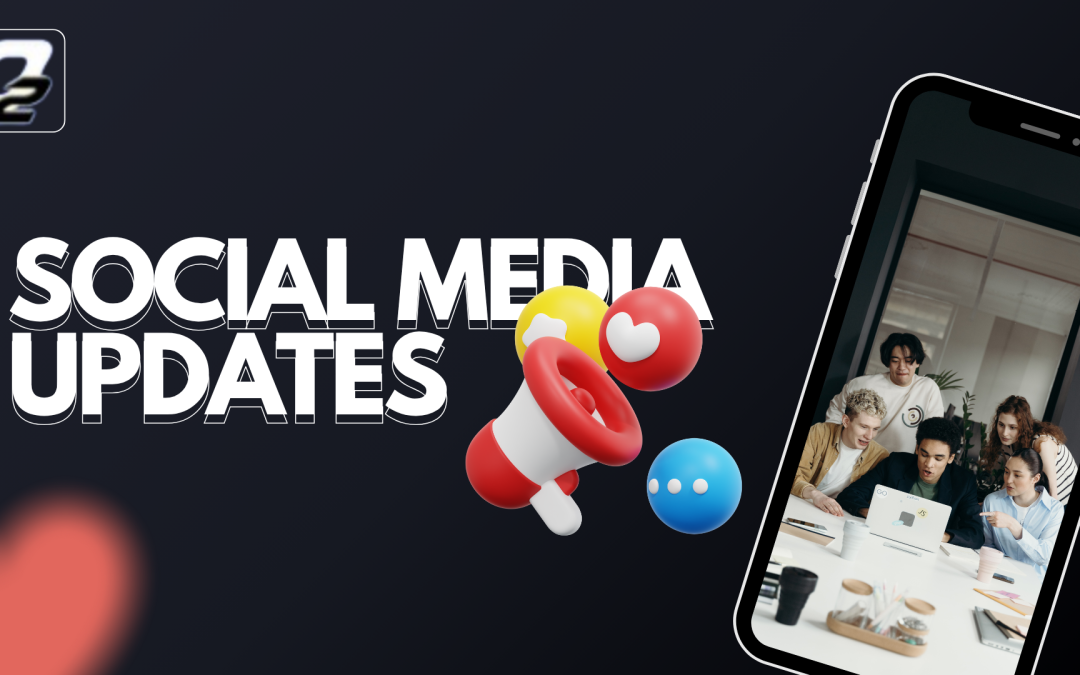
Discover the power of social media with the July 2025 update recap. Find out what’s new, what’s trending, and how to make the most of platform changes for marketers and creators.
July 2025 has introduced game-changing updates across social media platforms, giving marketers and creators new ways to grow their audience, improve engagement, and streamline workflows. From Instagram’s improved search visibility to TikTok’s enhanced creator tools, these updates are reshaping digital strategies. Here’s a detailed breakdown of what’s new and how it impacts you.
Instagram: Boosting Visibility and Business Communication
Instagram took a big step by making public posts from professional accounts appear in Google search results starting July 10, 2025. This means brands and creators can now reach more people organically without relying solely on Instagram’s algorithm. Business accounts also got smarter messaging tools, including auto-translation for DMs (launched July 5) and the ability to schedule responses (released July 15) – making it easier to manage customer interactions efficiently. Meanwhile, Threads (Meta’s Twitter alternative) now supports image sharing in direct messages (added July 18), adding a more visual touch to private conversations.
Key Takeaways:
- Professional account posts are now shown in Google search.
- Auto-translation (July 5) and scheduled responses in DMs
- Threads adds image sharing in private messages
TikTok: Stronger Policies and Smarter Posting Features
TikTok rolled out updated Terms of Service (effective July 25), affecting monetisation, branded content, and creator rewards. Users must accept these terms by July 25 to keep earning from the platform. Creators now have more control with in-app post scheduling (launched July 12), eliminating the need for third-party tools. A new “Footnotes” feature is also being tested (from July 20), allowing users to add fact-checking notes to videos – a move toward reducing misinformation. Plus, songwriters finally get recognition, as creators can now credit them directly in posts (feature added July 8).
Key Takeaways:
- New Terms of Service for monetisation and branded content
- Built-in post scheduling feature
- “Footnotes” fact-checking tool in testing
- Ability to credit songwriters in posts
X (Formerly Twitter): Better Ads and More Engaging Reactions

X partnered with AppsFlyer (July 11) to provide advertisers with third-party ad performance tracking, giving marketers more reliable data. The platform is also testing branded watermarks on shared screenshots (from July 17), which could help with tracking and brand visibility. Another exciting update is video reactions – users can now reply to posts with short video clips (launched July 14), making interactions more personal and dynamic.
Key Takeaways:
- Third-party ad tracking via AppsFlyer
- Branded watermarks on screenshots (testing)
LinkedIn: Advanced Analytics for Professionals

LinkedIn is making it easier for professionals to track their growth with new analytics APIs (released July 7). These tools allow users to monitor follower trends, video performance, and post engagement through third-party apps. The platform also released an updated ad optimisation guide (July 19) to help businesses maximise their return on investment. Additionally, users now get deeper insights into how their posts perform, including how many profile views and new followers each post generates (feature added July 9).
Key Takeaways:
- New analytics APIs for follower and content tracking
- Updated ad optimisation guide
- Detailed post-performance metrics
YouTube: New Discovery Features

YouTube replaced its “Trending” tab with category-specific Charts on July 13, focusing on music, movies and podcasts. On July 16, they began testing live-stream leaderboards to showcase top broadcasts. These changes help creators gain more targeted visibility. The new system rewards consistent engagement rather than just viral moments.
Key Takeaways:
- “Trending” replaced by category-specific Charts
- Live-stream engagement leaderboards in testing
WhatsApp: Smarter Group Chats

WhatsApp introduced AI-generated chat summaries on July 6 to help users stay updated in busy group chats. The feature automatically highlights key points and decisions from conversations. It’s particularly useful for work groups and large family chats. This update saves time by eliminating the need to scroll through long message histories.
Key Takeaways:
- AI-powered group chat summaries
Snapchat: AR Shopping Experience

Snapchat partnered with American Eagle on July 4 for an innovative AR shopping campaign. Users can now try on clothes virtually through Snap Map before visiting stores. The feature combines augmented reality with location-based marketing. This creates a seamless shopping experience that bridges online browsing and in-store purchases.
Key Takeaways:
- AR shopping campaign with American Eagle
- Snap Map integration for in-store visits
Reddit: Better Audience Insights

Reddit launched its “Community Intelligence” dashboard on July 3, providing brands with valuable audience behaviour data. The new tool helps marketers analyse trends and refine their targeting strategies. Key aspects include demographic breakdowns and engagement patterns. This update makes Reddit an even more powerful platform for community-driven marketing.
Key Takeaways:
- New Community Intelligence platform
- Audience behaviour insights for brands
Final Thoughts
These updates show that social media platforms are focusing on three key areas: better discovery, smarter analytics, and more engaging interactions. For marketers and creators, adapting to these changes early will be crucial for staying ahead. Whether it’s optimising Instagram posts for Google search, using TikTok’s new scheduling tools, or leveraging LinkedIn’s deeper analytics, there are plenty of opportunities to grow your presence in the second half of 2025.
Frequently Asked Questions (FAQs) – July 2025 Social Media Updates
1. How does Instagram’s Google search integration work for professional accounts?
Starting July 10, 2025, professional Instagram accounts’ public posts will appear in Google search results. This update enhances organic discoverability, allowing brands and creators to reach audiences beyond Instagram’s algorithm. Optimising captions, hashtags, and alt text will improve search rankings.
2. What changes did TikTok make to its Terms of Service?
TikTok’s updated Terms of Service (effective July 25, 2025) include stricter monetisation rules, branded content policies, and Creator Fund adjustments. Users must accept these terms to continue earning. The changes aim to improve transparency and compliance for businesses and creators.
3. How does X’s new video reaction feature work?
X (formerly Twitter) introduced video reactions (July 14, 2025), allowing users to reply to posts with short video clips. This makes engagement more dynamic and personal, similar to TikTok’s video replies. Brands can leverage this for interactive campaigns and customer engagement.
4. What benefits does LinkedIn’s new analytics API offer?
LinkedIn’s analytics API (July 7, 2025) provides deeper insights into follower growth, post performance, and video metrics. Businesses can integrate this data with third-party tools for better campaign tracking and audience analysis.
5. How does WhatsApp’s AI chat summary feature work?
Launched on July 6, 2025, WhatsApp’s AI chat summaries automatically extract key discussion points from group chats. It helps users catch up quickly without scrolling through long conversations—ideal for workgroups, event planning, and large family chats.